
 EN
EN
Understanding Fatigue Cracking in Asphalt Pavements
What is fatigue resistance in asphalt pavements?
When we talk about pavement fatigue resistance, what we really mean is how well roads hold up against all that constant traffic going back and forth day after day without cracking apart structurally. Engineers typically look at how many times a road surface can handle vehicle weight before it breaks down, which they often measure through something called the four point bending beam test. Research from Frontiers in Materials last year indicates that adding asphalt geogrids to road construction might actually triple or even quadruple the lifespan of pavements in lab settings. These grids help spread out stress across the surface area and slow down those tiny initial cracks that eventually lead to bigger problems.
Common causes of fatigue cracking in flexible pavements
Three primary factors contribute to fatigue cracking:
- Heavy vehicle loads exceeding design limits
- Thermal stresses from temperature fluctuations
- Moisture infiltration weakening base layers
A 2023 Ponemon Institute report found that 68% of premature failures result from poor drainage combined with high truck traffic, averaging $740,000 in repair costs per lane-mile.
Cyclic loading effects and micro-crack propagation mechanisms
Repeated traffic loads generate tensile stresses that initiate micro-cracks at the bottom of the asphalt layer. These cracks progress upward in three stages:
- Initiation: Stress concentrations around aggregate particles
- Stable growth: Gradual extension under continued loading
- Unstable fracture: Rapid failure when remaining material can no longer support applied loads
Research demonstrates that asphalt geogrids reduce crack growth rates by 40% through strain redistribution, particularly in pavements subjected to over 10,000 equivalent single axle loads (ESALs) annually. The Basquin fatigue model accurately predicts life extension (R² > 0.90) when geogrids are properly integrated.
Mechanical Role of Asphalt Geogrid in Enhancing Fatigue Resistance
How Asphalt Geogrid Distributes Strain and Reduces Tensile Stresses
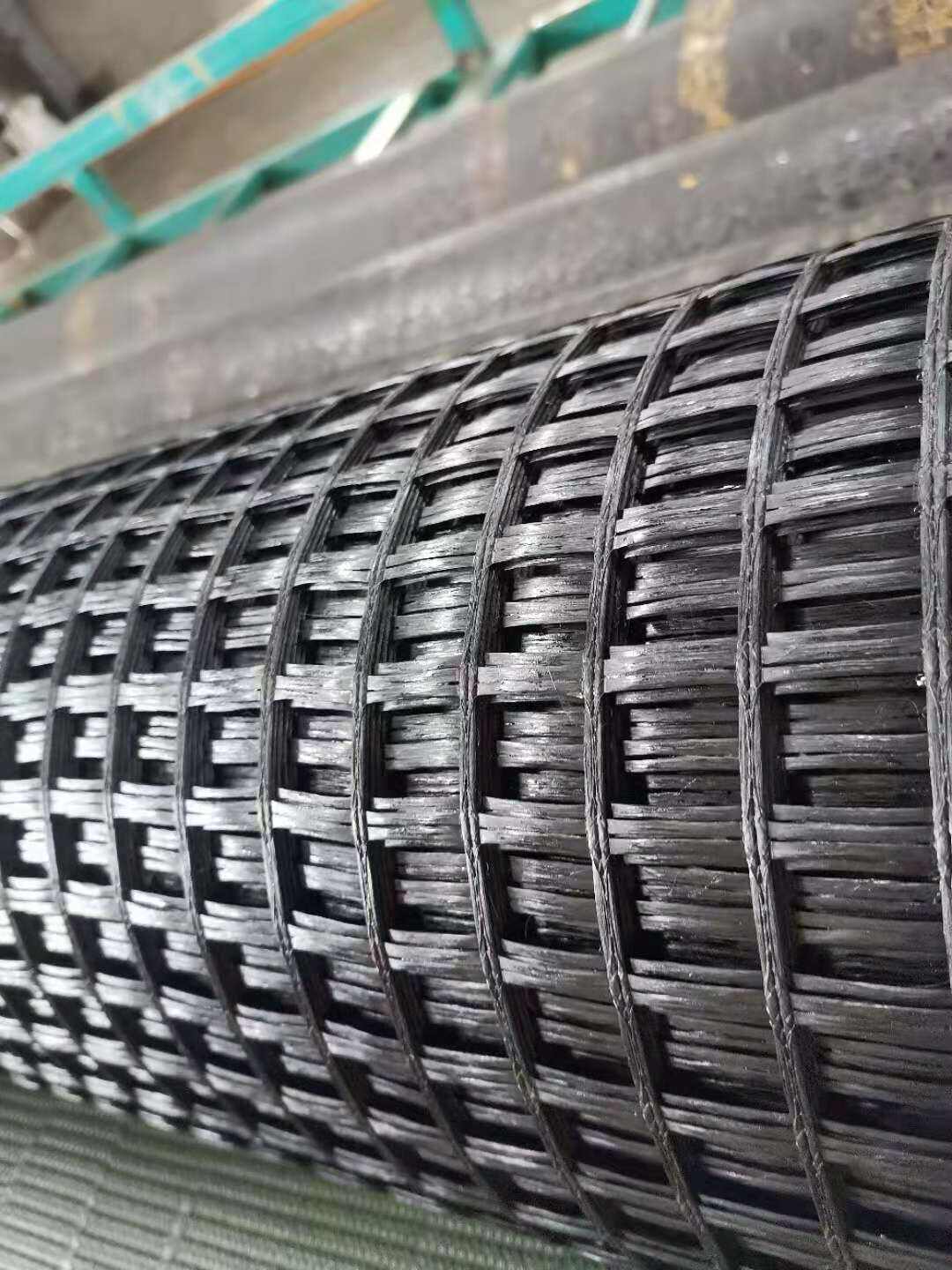
Asphalt geogrid functions as a kind of 3D reinforcement layer that helps spread out those traffic-related strains across a larger surface area. These materials usually have tensile stiffness ranging somewhere between 50 to 200 kN per meter, which actually creates what engineers call a bridging effect. This effect significantly cuts down on those localized tensile stresses that are often the starting point for cracks forming. Recent studies from 2024 using viscoelastic finite element modeling found that when using high modulus geogrids, there was about a 28.1 percent reduction in compressive strain and nearly half (around 48.4%) less shear strain under higher temperature conditions. When installed roughly one third of the way down into the asphalt layer, these grids cut transverse strain by approximately 42%. This placement strategy really works well to delay that pesky top down cracking problem that plagues so many road surfaces.
Interlayer Bonding and Stress Transfer in Geogrid-Reinforced Systems
The way the geogrid bonds with the asphalt around it makes up about 70% of how well the whole system works. When the shear bond strength goes above 0.5 MPa, this helps move stresses effectively from the top layer down to the base layer beneath. What happens is called mechanical interlocking. Basically, when hot asphalt gets into those little openings in the geogrid, it creates better support under pressure. Tests show this method actually transfers stress 30 to 50 percent better than areas without any reinforcement during these special shear tests between layers.
Mechanical Response of Asphalt Layers Under Repeated Loading
When we run cyclic loading simulations, the specimens reinforced with geogrids last about 2.5 times longer before failing compared to regular control samples. What makes this happen is that the reinforcement actually slows down how quickly the material loses its stiffness. After the first cracks appear, the structure stays more intact, so instead of losing 8.2% of stiffness every 1,000 cycles without reinforcement, it only drops to 3.1% per thousand cycles when reinforced. Looking at lab results from those 4PBB fatigue tests, another interesting finding emerges. Geogrids rated at 100 kN/m tensile strength manage to boost those critical strain limits by nearly 40 percent when tested under loading frequencies of 10 Hz.
Debating Performance: Is Asphalt Geogrid Overestimated in Thin Overlays?
When it comes to road overlays, geogrids really make a difference in those thicker sections around 50 mm and above, but they don't do much for thinner layers. Recent research from 2023 showed just a modest 12 to 15 percent boost in lifespan for 30 mm overlays compared to a much better 40 to 60 percent gain in 75 mm thick sections. Why does this happen? Well, basically the thinner layers aren't deep enough to create proper composite action between materials. This leads to shear stresses building up between layers that can hit over 0.7 MPa, which is actually higher than what most geogrids are designed to handle according to standard specifications.
Laboratory Evaluation of Geogrid-Reinforced Asphalt Performance
Four-point bending beam (4PBB) test for fatigue life assessment
The 4PBB test serves as a common approach to assess how well geogrid reinforced asphalt stands up to repeated stress over time. During this procedure, researchers apply regular cycles of force while tracking how much strain builds up in the material, which helps them understand when cracks start forming and how they spread throughout the sample. Recent research published in the journal Materials and Structures back in 2023 showed something interesting. The tests revealed that samples strengthened with geogrids actually developed micro cracks at around 41 percent slower rate than those without reinforcement, according to measurements taken through strain amplitude analysis. This finding suggests significant benefits from incorporating geogrids into road construction materials.
Simplified flexural point (SFP) method vs. conventional testing approaches
SFP represents an advancement over older ways of assessing fatigue, such as the commonly used 50% stiffness drop threshold. Instead of relying on simple percentage measurements, it looks at where strain curves start changing direction. What makes this method stand out is how sensitive it is to signs of damage appearing early on, something that matters a lot when working with materials that have reinforcement layers. Studies comparing different approaches found that SFP can spot potential failures between 18 to 22 percent sooner than what we typically see with standard testing procedures. This advantage becomes even more pronounced when dealing specifically with geogrid products rated at 100 kilonewtons per meter or higher tensile strength.
Testing double-layered specimens with asphalt geogrid: Setup and results
Double-layered beam specimens with an interlayer geogrid better simulate real-world pavement behavior. When placed at one-third the depth above the neutral axis, geogrids reduced tensile stresses by 29% after 10,000 load cycles. Results from optimized configurations include:
| Reinforcement Type | Cycles to Failure | Strain Rate Reduction |
|---|---|---|
| Unreinforced | 15,200 ± 1,100 | Baseline |
| 50x50 kN/m grid | 23,700 ± 1,800 | 34% |
| 100x100 kN/m grid | 28,400 ± 2,300 | 52% |
Defining failure: Strain threshold versus stiffness degradation criteria
Emerging research supports strain-based failure thresholds (typically 100-150 µm/m) over stiffness metrics for geogrid-reinforced systems. Since residual stiffness may remain high even after extensive cracking, relying on stiffness alone can overestimate functional service life by 12-18%.
Measuring the Fatigue Life Improvement from Asphalt Geogrid Reinforcement
Fatigue Life Improvement Factor: Definition and Calculation Methods
When talking about road surfaces, the fatigue life improvement factor basically tells us just how much longer pavements last when we add geogrid reinforcement beneath them, especially when vehicles keep passing over repeatedly day after day. To figure this out, engineers look at those crucial strain points where cracks start forming, comparing areas with and without reinforcement. They commonly use something called the Simplified Flex Point method for these calculations. According to recent research published by Springer in 2024, roads with geogrid underneath can handle roughly two to three times as many vehicle passes before showing signs of wear compared to regular asphalt. The actual numbers vary quite a bit though, typically landing somewhere between 1.8 and 3.2 based on how heavy the traffic gets on those roads.
Field Performance: Reinforced vs. Unreinforced Asphalt Pavement Comparisons
Field monitoring across 23 highway sections over 12 years reveals clear advantages for geogrid-reinforced pavements:
- 57% fewer fatigue cracks at 500,000 ESALs
- 35% slower stiffness degradation
- 42% lower annual maintenance costs
High-strength geogrid models (100—200 kN/m) achieved performance comparable to conventional pavements with 40% thicker asphalt layers, confirming their cost-efficiency in heavy-traffic environments.
Case Study: Extended Service Life in Highway Rehabilitation Using Asphalt Geogrid
A 9-mile interstate rehabilitation project used polyester-based asphalt geogrid between milled and new asphalt layers. After eight years of monitoring:
- Reflective cracking was reduced by 83% compared to adjacent unreinforced sections
- International roughness index (IRI) values were 72% lower
- Projected lifespan increased from 10 to 18 years
This solution cut lifecycle carbon emissions by 28% due to reduced material use and maintenance frequency, aligning with findings from the 2024 Pavement Reinforcement Efficiency Report on sustainable infrastructure strategies.
Best Practices for Design and Implementation of Asphalt Geogrid Systems
Optimal placement of asphalt geogrid within pavement cross-sections
Putting the geogrid in at around one third of the asphalt layer depth cuts down transverse strain by roughly 42 percent when compared to placing it on the surface, findings from a recent 2023 finite element study suggest. The location actually works best for spreading out loads evenly across the pavement and cutting down on those pesky delamination issues caused by shear forces between layers. For engineers working on road projects, adjusting how deep they install the grid makes sense depending on local traffic conditions and the state of the underlying base material. Getting this right helps fight against premature cracking and extends the life of the pavement overall.
Ensuring material compatibility between geogrid and asphalt mixtures
Select geogrids with polymer formulations whose thermal expansion rates match asphalt binders (within ±0.5%). Mismatches create stress concentrations that accelerate cracking in fluctuating climates. Bond strength should exceed 1.8 MPa under ASTM D6638 to prevent interlayer slippage during cyclic loading.
Long-term monitoring of geogrid-reinforced pavement performance
Reinforced pavements retain 92% structural integrity after ten years, compared to 68% for unreinforced sections. Key performance indicators include:
- Interlayer bond strength retention (¥85% of initial value)
- Geogrid exposure rate (<3% of surface area)
- Crack propagation speed (0.8 mm/year)
A 2024 pavement study confirmed that combining geogrid reinforcement with routine maintenance extends service life by 50%, demonstrating significant long-term cost and performance benefits.
FAQs
What is fatigue cracking in asphalt pavements?
Fatigue cracking refers to the damage that occurs over time to asphalt pavements due to repeated traffic loads, leading to structural failures if not addressed properly.
How does asphalt geogrid help in preventing fatigue cracking?
Asphalt geogrid reinforces the pavement structure by distributing strain, reducing tensile stresses, and preventing the onset and growth of micro-cracks, thereby prolonging the pavement's lifespan.
Where should asphalt geogrid be placed within a pavement structure?
The optimal placement of asphalt geogrid is around one-third of the depth of the asphalt layer, which helps in effectively distributing loads and minimizing strain to extend the life of the pavement.
Does asphalt geogrid work effectively for thin overlays?
Asphalt geogrid is more effective for thicker overlays (50 mm and above) but offers limited benefits for thinner layers due to insufficient depth for proper material interaction.
What are the cost benefits of using asphalt geogrid?
Using asphalt geogrid can lead to reduced maintenance costs, lower frequency of repairs, and extended pavement service life, resulting in cost savings and efficiency in heavy-traffic areas.
Table of Contents
- Understanding Fatigue Cracking in Asphalt Pavements
- Mechanical Role of Asphalt Geogrid in Enhancing Fatigue Resistance
- Laboratory Evaluation of Geogrid-Reinforced Asphalt Performance
- Measuring the Fatigue Life Improvement from Asphalt Geogrid Reinforcement
- Best Practices for Design and Implementation of Asphalt Geogrid Systems
- FAQs