
 EN
EN
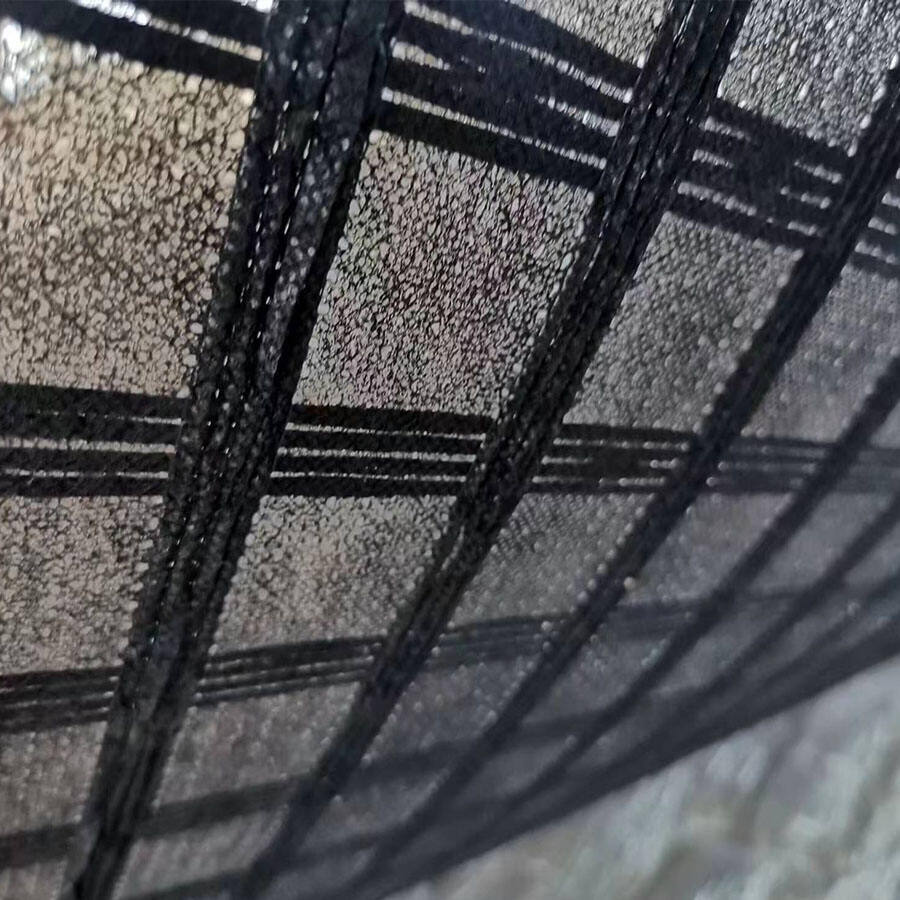
Filtration in Geocomposites: Ensuring Soil Stability and Water Flow
How Geocomposites Prevent Soil Migration While Allowing Water Passage
Geocomposites work as dual filters because they have layers of geotextile material acting like selective barriers between different materials. The special fabrics allow water to pass through at rates above 50 gallons per square foot each day, yet still hold back about 98 percent of tiny silt particles. Made from non-woven polypropylene, these materials form winding paths that catch small soil particles moving through them, all while keeping water flowing freely. This makes geocomposites really good choices for places where erosion is a problem, such as steep slopes or around retaining walls that need protection from soil loss over time.
Key Criteria: Permeability and Retention for Effective Filtration
Performance hinges on balancing two opposing metrics:
- Permeability: Minimum 0.1 cm/s flow capacity under 10 kPa normal stress
- Retention: >90% particle capture for soils with D85 ⟶ 0.3 mm
Laboratory tests show properly specified geocomposites maintain ≥85% initial permeability after 25-year simulated service life using the ASTM D7178 accelerated testing protocol.
Selecting Optimal Aperture Size for Long-Term Performance
Aperture sizing requires matching geotextile opening dimensions to soil gradation curves:
| Soil Type | Optimal Aperture (Oʊ) | Clogging Risk Factor |
|---|---|---|
| Sandy gravel | 0.8-1.2 mm | Low (⟵15%) |
| Silty sand | 0.3-0.6 mm | Moderate (25-40%) |
| Clayey silt | 0.15-0.25 mm | High (≥60%) |
Oversized openings permit soil loss, while undersized selections lead to premature clogging—a leading cause of 34% filtration system failures according to the GeoInstitute (2022).
Case Study: Geocomposite Filters in Coastal Embankment Protection
For their 2 mile plus seawall along the coast, engineers went with needle punched geocomposite materials featuring around 0.22mm openings to tackle those persistent tidal erosion issues. Field tests showed something pretty impressive actually - only about 11% of the soil was lost compared to what happens with regular old granular filters. Plus these materials kept holding up better hydraulically too, retaining 12% more conductivity even after going through five full freeze thaw cycles. And let's not forget the bottom line stuff either; this approach saved roughly 740 grand over time because there just wasn't as much maintenance needed anymore. What really stands out though is how it stopped nearly two thousand tons worth of sediment from washing into nearby marine areas each year, all while keeping the whole structure intact during those brutal winter storms we get sometimes.
Drainage Efficiency of Geocomposites: Managing Subsurface Water Flow
Mechanism of Lateral Water Conveyance in Cored Geocomposites
Cored geocomposites work by using specially designed drainage cores, usually made of HDPE or PP materials, to move water sideways through the ground and stop it from soaking the soil. The three dimensional network of these cores creates pathways for water to travel quickly across the area, even when there's pressure on top from things like roads or buildings. When we put together geotextile filters with the solid core shapes, what happens is pretty cool actually. The system keeps water below the surface away from soil particles while still holding everything together underneath pavements or along embankments. Some tests have shown that when the cores are properly designed, they can handle over 740 liters per square meter each day in lab settings. That kind of performance makes them really valuable for managing water in construction projects.
Transmissivity and Compressive Resistance: Core Performance Factors
Two critical metrics define geocomposite drainage efficiency:
| Property | Impact on Performance | Ideal Range |
|---|---|---|
| Transmissivity | Water conveyance capacity | 0.01–0.05 m²/sec |
| Compressive Resistance | Core deformation under load | 50–200 kPa (road systems) |
High-density polyethylene (HDPE) balances these properties, resisting creep deformation while maintaining ≥90% void space under 400 kPa pressures—ensuring reliable performance under heavy vehicle loads in transportation applications.
Designing Layered Systems to Maintain Hydraulic Efficiency
Multilayer geocomposites integrate:
- Nonwoven geotextile filters (80–120 g/m²) for particle retention
- Corrugated or dimpled drainage cores (2–10 mm thickness)
- Composite bonding techniques that prevent delamination
These configurations extend service life by 30–50% compared to single-material drains, particularly in frost-prone regions where ice lens formation threatens conventional systems.
Case Study: Highway Edge Drains Using High-Flow Geocomposite Cores
In 2023, engineers working on road improvements swapped out old aggregate drainage systems for these new tri-planar geocomposite materials across about 18 kilometers of highway shoulder areas. What makes this approach interesting is how much faster it was to install everything. Instead of days spent laying down individual components, crews could roll out pre-made sections which cut down installation time nearly two thirds. Tests confirmed these materials kept their drainage capacity at around 0.03 square meters per second even when subjected to heavy vehicle traffic equivalent to 20 ton axles. Most impressive perhaps was the near elimination of those annoying pavement edge failures caused by erosion problems. After watching how things worked post installation, maintenance teams noticed something else too: there seemed to be about 40 percent less damage happening to the base layers from water infiltration compared with what happened before when they used regular gravel based drainage solutions.
Reinforcement Capabilities of Geocomposites: Enhancing Load-Bearing Capacity
Geocomposites excel at reinforcing weak soils by combining tensile strength with intelligent structural design. Their ability to distribute loads across unstable terrain makes them indispensable in infrastructure projects where soil integrity is critical.
Distributing Loads Over Weak Soils Through Tensile Strength
Geocomposites help make up for what soil lacks in tensile strength by adding in strong polymers or geogrids. Once placed within different soil layers, they form something like a reinforced system that spreads out stress sideways instead of letting it concentrate in one spot. Tests show this can cut down on those pesky pressure hotspots by around 40 percent. The result? Road beds and embankments stay level longer without sinking unevenly. This works particularly well in places where the ground is made of soft clay or just loose grains that tend to shift around under normal conditions.
Soil-Geocomposite Interaction and Stress-Strain Matching Principles
For proper reinforcement to work, the way a geocomposite deforms needs to match up with how the surrounding soil behaves. When materials have stiffness ratios somewhere between 5 to 1 and 10 to 1 compared to regular soil, they tend to interact best. These materials help transfer loads effectively without creating too much strain difference between layers. According to findings from the latest Geocomposite Performance Report released in 2024, when engineers design systems using these ratio ranges, they see improvements in bearing capacity ranging from about 28% all the way up to 35% specifically for highway subgrades. This kind of performance makes a real difference in road construction projects where stability is critical.
Addressing Long-Term Creep Under Sustained Loading Conditions
Polymer-based geocomposites must resist time-dependent deformation. Modern formulations using high-density polyethylene (HDPE) exhibit creep rates below 2% over 50-year design lifespans when operated within 40–60% of ultimate tensile strength. For rail projects with dynamic loads, hybrid designs incorporating polyester grids and nonwoven geotextiles reduce cumulative deformation by 22% compared to single-material solutions.
Case Study: Stabilizing Railway Subgrades With Reinforced Geocomposites
One of Europe's leading railway companies recently tackled a tricky problem on their network by stabilizing around 12 kilometers of track running through peat soil areas. They implemented what's called triaxial geocomposite reinforcement for this job. The solution mixed together biaxial geogrids along with special drainage cores. After installation, they saw some impressive results: maintenance needs dropped by about 32%, the tracks could handle 19% heavier trains, and there were absolutely no washout incidents during the following 12 years of operation. What makes this approach stand out is its clever two-in-one nature. These composite materials don't just strengthen weak ground conditions but also manage water flow issues at the same time, something that traditional methods often struggle with separately in road and rail projects across different terrains.
Multifunctional Design: How Structure Enables Integrated Performance
Modern geocomposites achieve integrated performance through strategically engineered layered systems. By combining geotextiles, drainage cores, and geogrids in a single structure, these materials address filtration, drainage, and reinforcement needs simultaneously—a critical advantage for industrial applications requiring multi-system efficiency.
Layered Composition: Combining Geotextiles, Cores, and Geogrids
A typical geocomposite’s cross-section includes:
- Nonwoven geotextiles for soil retention and filtration (≥95% particle capture efficiency per ASTM D4751)
- Corrugated or cored sheets providing lateral drainage (transmissivity >0.01 m²/sec under 500 kPa stress)
- Biaxial geogrids delivering tensile strength (up to 50 kN/m modulus, ISO 10319 standards)
This three-tiered design reduces installation time by 40% compared to traditional layered systems.
Material Selection for Durability and Functional Synergy
Material combinations are optimized to balance chemical resistance and mechanical performance:
| Material Pairing | Key Strength | Typical Use Cases |
|---|---|---|
| PP Geotextile + HDPE Core | Chemical resistance (pH 2–12) | Landfill liners, mining sites |
| PET Geogrid + PVC Core | High tensile strength | Retaining walls, slope stabilization |
| Composite Geomembranes | Puncture resistance (>500 N) | Roadway subgrades |
Hybrid Manufacturing Advances in Geocomposite Engineering
Recent innovations like ultrasonic welding and co-extrusion bonding allow 25% stronger layer adhesion compared to adhesive-based methods, ensuring seamless integration of dissimilar materials without compromising individual layer functionality.
Case Study: Custom Geocomposites for Landfill Leachate Drainage Systems
A 2023 ASTM study demonstrated how a tailored three-layer geocomposite reduced leachate buildup by 78% in a 50-acre landfill. The system combined a needle-punched geotextile (120 g/m²) with a high-flow core (0.15 m/day permeability), achieving both filtration and drainage while withstanding 20-year projected chemical exposure.
Synergistic Integration: Optimizing Filtration, Drainage, and Reinforcement Together
Real-World Performance: Slope Stabilization Through Combined Functions
Modern geocomposites achieve 89% higher slope stabilization success rates compared to single-function solutions by integrating filtration, drainage, and reinforcement simultaneously. In coastal highway projects, triple-layer geocomposites reduced soil erosion by 62% while maintaining ≥1.2 m³/day/m lateral drainage capacity. The synergy stems from:
- Tensile reinforcement distributing loads across weak substrates
- Core drainage channels preventing hydrostatic pressure buildup
- Smart filter layers retaining 98% of fines while allowing ⟰25 µm particle migration
Balancing All Three Functions in System-Level Geocomposite Design
Optimizing multifunctional performance requires prioritizing dominant stressors:
| Project Type | Primary Function | Secondary Function | Critical Metric |
|---|---|---|---|
| Landfill caps | Filtration (70%) | Reinforcement (25%) | UV resistance >20 years |
| Retaining walls | Drainage (60%) | Reinforcement (35%) | Transmissivity ≥0.5 L/s |
| Railway embankments | Reinforcement (55%) | Drainage (40%) | Creep resistance <2%/year |
Avoiding Over-Engineering: Cost-Effective vs. Performance-Driven Specs
A 2022 audit of 47 infrastructure projects revealed that 33% overspent on geocomposites due to excessive safety factors (>3.0). Best practices include conducting site-specific soil-geocomposite interaction modeling, validating prototypes through ASTM D7361 accelerated creep testing, and implementing 15-year lifecycle cost analysis.
Strategy: Adopting Performance-Based Specifications in B2B Projects
Leading contractors now mandate minimum 120 kN/m tensile strength under saturated conditions, ≥95% retention efficiency after 10,000 hydraulic loading cycles, and demonstrated drainage capacity maintenance above 80% after five years of service. This approach reduced material costs by 18–22% in recent US DOT projects while achieving 99.3% compliance with AASHTO M288-17 standards.
Frequently Asked Questions
What are geocomposites and how do they function?
Geocomposites are engineered materials combining different layers like geotextiles, drainage cores, and geogrids. They function by simultaneously addressing filtration, drainage, and reinforcement needs in construction projects, effectively managing soil stability and water flow.
Why are aperture sizes important in geocomposites?
Aperture sizes in geocomposites match soil gradation to ensure effective filtration and prevent clogging or soil loss. Correct sizing ensures long-term performance and minimizes filtration system failures.
How do geocomposites enhance drainage systems?
Geocomposites enhance drainage through specially designed cores that facilitate lateral water movement. They maintain subsurface water flow efficiently, even under heavy loads, making them suitable for road systems and embankments.
What role do geocomposites play in reinforcing weak soils?
Geocomposites reinforce weak soils by distributing loads across unstable terrain, reducing pressure hotspots. They incorporate polymers or geogrids to provide the tensile strength needed for stability in infrastructure projects.
Can geocomposites be customized for specific applications?
Yes, geocomposites can be customized with specific layer compositions to suit various applications like landfill liners, mining sites, retaining walls, and roadway subgrades, ensuring optimal performance and durability.
Table of Contents
- Filtration in Geocomposites: Ensuring Soil Stability and Water Flow
- Drainage Efficiency of Geocomposites: Managing Subsurface Water Flow
- Reinforcement Capabilities of Geocomposites: Enhancing Load-Bearing Capacity
- Distributing Loads Over Weak Soils Through Tensile Strength
- Soil-Geocomposite Interaction and Stress-Strain Matching Principles
- Addressing Long-Term Creep Under Sustained Loading Conditions
- Case Study: Stabilizing Railway Subgrades With Reinforced Geocomposites
- Multifunctional Design: How Structure Enables Integrated Performance
- Synergistic Integration: Optimizing Filtration, Drainage, and Reinforcement Together
- Real-World Performance: Slope Stabilization Through Combined Functions
- Balancing All Three Functions in System-Level Geocomposite Design
- Avoiding Over-Engineering: Cost-Effective vs. Performance-Driven Specs
- Strategy: Adopting Performance-Based Specifications in B2B Projects
- Frequently Asked Questions