
 EN
EN
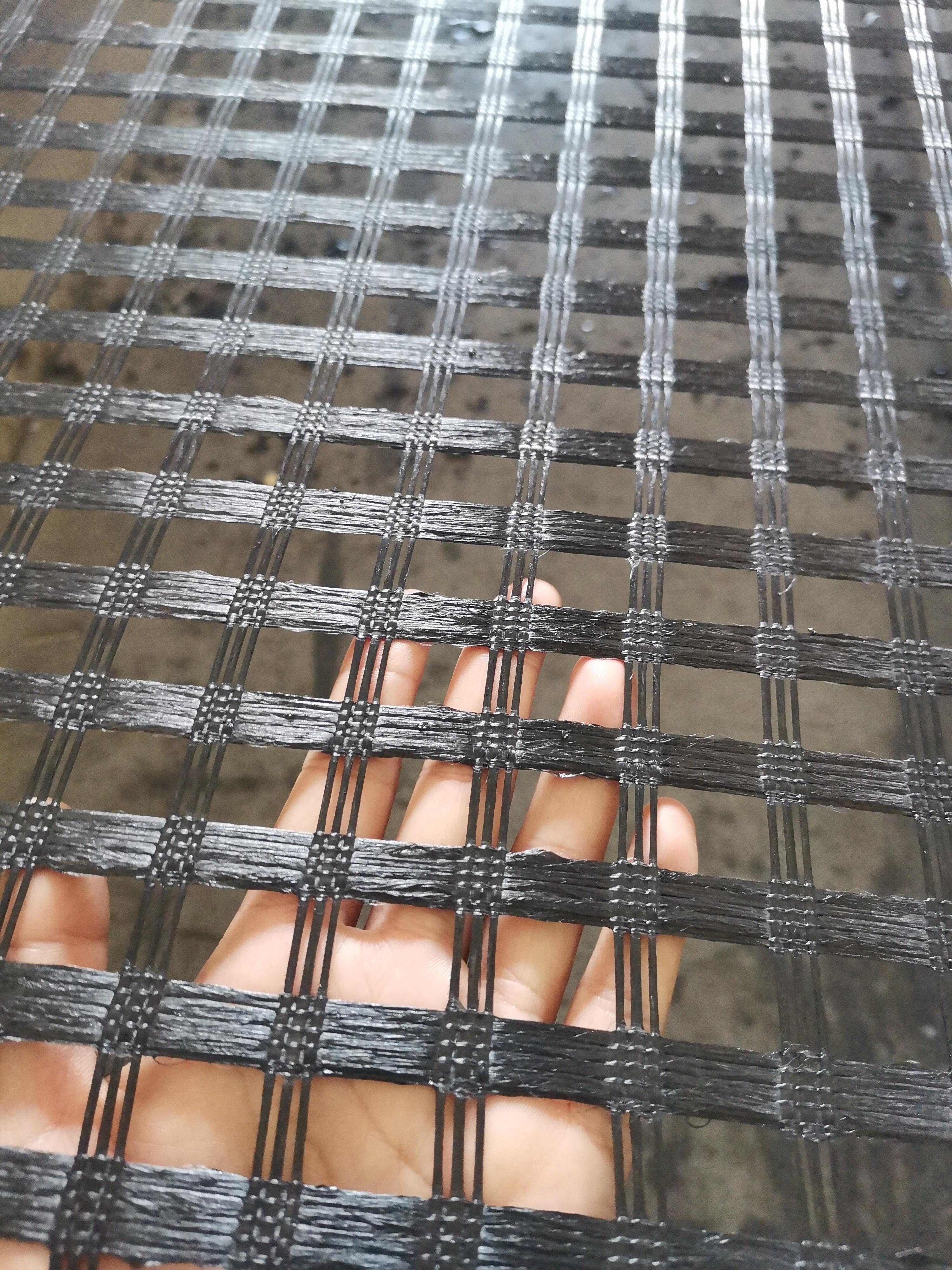
Understanding Uniaxial Geogrid: Structure and Key Mechanical Properties
Uniaxial Geogrid – High Tensile Strength in One Direction
The strength of uniaxial geogrids comes from those polymer ribs running straight through them in one direction only. These grids can handle tensile forces over 120 kN per meter along that main axis. Because they reinforce things in just one direction, they work really well for stuff like building retaining walls or stabilizing slopes where pressure tends to come from known directions. When compared to biaxial options, these grids have longer openings between the ribs which actually helps lock soil particles better without needing as much material overall. That's why many engineers prefer them when budget is tight but performance still matters.
Mechanisms of Load-Bearing Capacity Improvement Through Polymer Orientation
Uniaxial geogrids get their strength from how molecules line up when they're made. During production, the extrusion and stretching process aligns those polymer chains in one direction. What this creates is basically a grid structure that holds back soil particles. The mechanical interlock effect stops the soil from spreading sideways when weight is applied vertically. Plus, it spreads out the stress across a larger surface area. Tests on aggregates show that this alignment can boost shear resistance around 40% higher than regular soil without reinforcement. That makes a big difference in stability for construction projects.
Tensile Strength and Elongation Characteristics Under Industrial Loads
In industrial settings, geogrids need to strike a good balance between strong tensile properties and limited stretching capabilities, usually keeping elongation below 12% when reaching maximum load capacity. The uniaxial type holds up well against repeated stress caused by heavy equipment operation. Field tests over extended periods have revealed minimal changes in shape, typically under 2% after a decade in service conditions. These materials resist excessive stretching which helps avoid unexpected breakdowns something that matters a lot for maintaining stable pavement structures across manufacturing facilities and warehouses where consistent ground support is essential for daily operations.
Soil Reinforcement and Load Distribution Mechanisms
Soil Reinforcement and Interlock With Geogrids: Enhancing Shear Resistance
The ribbed design of uniaxial geogrids helps stabilize soil by creating a kind of mechanical grip with the granular particles around them. What happens here is pretty interesting - this interaction forms what engineers call a composite material, which can boost shear resistance significantly. Some tests show improvements of around 60% when compared to regular soil without reinforcement. The reason? The polymer in these grids tends to line up in ways that channel tensile forces along the main stress lines. Industrial applications really benefit from this because when heavy loads get placed on the ground, those tiny openings in the geogrid actually stop soil particles from moving around so much. This lateral redistribution of stress means we avoid those pesky localized failures where the ground just gives way suddenly under pressure.
Confinement Effect and Lateral Restraint in Granular Layers
Open grid designs work by holding soil particles in place laterally, which cuts down on sideways movement when the ground gets compacted or loaded. This kind of restraint actually makes the soil particles lock together more tightly. The result? Soil strength measured through the California Bearing Ratio test goes up somewhere between double and triple what it was before. For those working on container yard foundations, keeping pressure around 30 to maybe 50 kilopascals seems to be standard practice. At these levels, the granular material underneath can handle pretty heavy stuff too – think about truck axles pushing over 10 tons – without forming those annoying ruts we all see at busy ports and storage facilities.
Stress Redistribution and Reduction of Differential Settlement
When concentrated loads get spread out over a larger surface area, uniaxial geogrids can cut down vertical stress on subsoil anywhere from 40% to 70%. This has been observed in pavement studies that tracked performance over many years. The benefit is especially noticeable in weak subgrades such as clay or peat soils, where areas without reinforcement tend to settle unevenly with differences sometimes exceeding 50 millimeters between points. Looking at recent findings from a geotechnical report published last year, industrial floors strengthened with these grids saw annual maintenance savings around $18 per square meter because there was simply less wear and tear on surfaces caused by deformation issues.
Durability and Long-Term Performance in Industrial Environments
Durability of Geogrids Under Chemical, Biological, and Physical Stressors
When faced with chemical spills, microbial growth, or physical wear, uniaxial geogrids hold up remarkably well. The polymer material gets special treatment with UV stabilizers, which helps it keep around 95% of its original strength even after spending nearly 1,000 days in harsh weather tests according to recent research from MDPI. For factories dealing with aggressive chemicals day in and day out, this kind of durability makes all the difference. Another smart design feature involves adding hydrophobic compounds during manufacturing. These substances basically repel water and stop bacteria from taking root, significantly slowing down any biological breakdown process over time.
Uniaxial Geogrid – Durability & Longevity in Aggressive Industrial Environments
The oriented polymer structure provides inherent resistance to common industrial stressors like fuel hydrocarbons, extreme temperature fluctuations (-40°C to 80°C), and cyclic loading. Unlike biaxial alternatives, uniaxial geogrids maintain structural integrity in applications requiring directional reinforcement, such as retaining walls adjacent to chemical processing facilities.
Extended Service Life and Reduced Lifecycle Costs: Evidence From Long-Term Monitoring
Over fifteen years, researchers looked at truck staging areas reinforced with geogrids and found these installations cut maintenance expenses by around forty percent when compared to regular aggregate bases. The way stress gets redistributed really helped too, cutting down on differential settlement problems by roughly sixty two percent. This means no more surface cracks forming even when trucks weighing twenty five tons drive over them according to Structures Insider from last year. Looking at things over their whole life cycle shows pretty impressive returns too. For every dollar spent on implementing geogrids, companies get back three dollars worth of savings thanks to longer lasting pavements and needing fewer materials replacements down the road.
Critical Applications in Industrial Site Development
Applications of uniaxial geogrids in industrial sites: container yards and warehouse floors
Uniaxial geogrids provide critical reinforcement for high-traffic zones like container yards, where they reduce rutting by 60–70% compared to unreinforced surfaces (Geosynthetics International 2023). In warehouse floors, their directional strength aligns with forklift pathways, limiting crack propagation while maintaining 1.5–2.5% elastic deformation under 40-ton racking systems.
Heavy-duty pavement systems for manufacturing plants
Steel-reinforced geogrid composites withstand temperatures up to 140°F in forging plants, maintaining tensile strengths exceeding 200 kN/m despite thermal cycling. A 2022 analysis of 37 manufacturing facilities showed geogrid-reinforced pavements required 42% fewer repairs over 5 years compared to conventional concrete slabs.
Railway sidings and crane pads: optimizing foundation performance
Uniaxial geogrids in rail sidings demonstrate 3:1 stress distribution ratios, reducing ballast settlement by 55% under 100-ton locomotive loads. For gantry crane pads, field monitoring reveals 0.8–1.2 mm vertical displacement per 100-ton lift capacity—65% lower than unreinforced alternatives.
Case Study: 40% reduction in pavement thickness using uniaxial geogrid in an automotive plant
A Tier 1 automotive supplier achieved $2.3 million in cost savings by integrating uniaxial geogrids into their assembly plant expansion. The geosynthetic-reinforced pavement system enabled 350 mm thickness reduction while maintaining OSHA-compliant load-bearing capacity for 80-ton transport vehicles. Post-construction monitoring (2019–2023) shows 0.5 mm/year settlement rate—83% lower than adjacent conventional pavements.
Economic and Operational Advantages of Uniaxial Geogrid Implementation
Uniaxial geogrid – reduces maintenance needs and downtime
Industrial sites benefit greatly from uniaxial geogrid systems since they cut down on how often maintenance needs to happen and stop those annoying operational interruptions. What makes these systems work so well? The polymer structure is arranged in a specific direction that spreads weight better across surfaces. Tests show this actually reduces rutting and cracking problems by around 40 percent when compared with regular surfaces without reinforcement according to Geosynthetics International research from last year. Container yards really feel the difference too. Pavements strengthened with geogrids need about 30% less repairs after just five years of constant traffic according to field observations. That kind of durability saves money and headaches for facility managers dealing with heavy equipment movement day after day.
Cost-benefit analysis of geogrid-reinforced vs. unreinforced industrial pavements
A comparative evaluation of pavement systems reveals:
| Metric | Geogrid-Reinforced | Unreinforced |
|---|---|---|
| Initial material costs | $18–22/m² | $25–30/m² |
| 10-year maintenance | $4,200 | $11,000 |
| Downtime per repair | 8–12 hours | 24–48 hours |
The geogrid's confinement effect reduces aggregate thickness requirements by 25–35% while improving load-bearing capacity. This translates to a 2.7-year average payback period, with reinforced pavements outperforming traditional designs in lifecycle cost-efficiency across 78% of industrial applications.
FAQ
What is a uniaxial geogrid?
A uniaxial geogrid is a geosynthetic material designed to provide reinforcement in one primary direction, enhancing tensile strength and load distribution in construction applications.
How does a uniaxial geogrid improve soil stability?
Uniaxial geogrids improve soil stability through mechanical interlock and lateral restraint mechanisms, enhancing shear resistance and preventing soil displacement under heavy loads.
What are the benefits of using uniaxial geogrids in industrial environments?
Benefits include reduced maintenance needs, enhanced durability under chemical and biological stressors, longer service life, and cost savings in reinforced pavements.
Can uniaxial geogrids be used in high-temperature environments?
Yes, uniaxial geogrids can withstand extreme temperature fluctuations and offer resistance to common industrial stressors, making them suitable for high-temperature applications.
How do uniaxial geogrids compare to biaxial geogrids?
Unlike biaxial geogrids, uniaxial geogrids provide reinforcement in a single direction, offering unique benefits in durability and load distribution for specific construction needs.
Table of Contents
- Understanding Uniaxial Geogrid: Structure and Key Mechanical Properties
- Soil Reinforcement and Load Distribution Mechanisms
- Durability and Long-Term Performance in Industrial Environments
-
Critical Applications in Industrial Site Development
- Applications of uniaxial geogrids in industrial sites: container yards and warehouse floors
- Heavy-duty pavement systems for manufacturing plants
- Railway sidings and crane pads: optimizing foundation performance
- Case Study: 40% reduction in pavement thickness using uniaxial geogrid in an automotive plant
- Economic and Operational Advantages of Uniaxial Geogrid Implementation
- FAQ