
 EN
EN
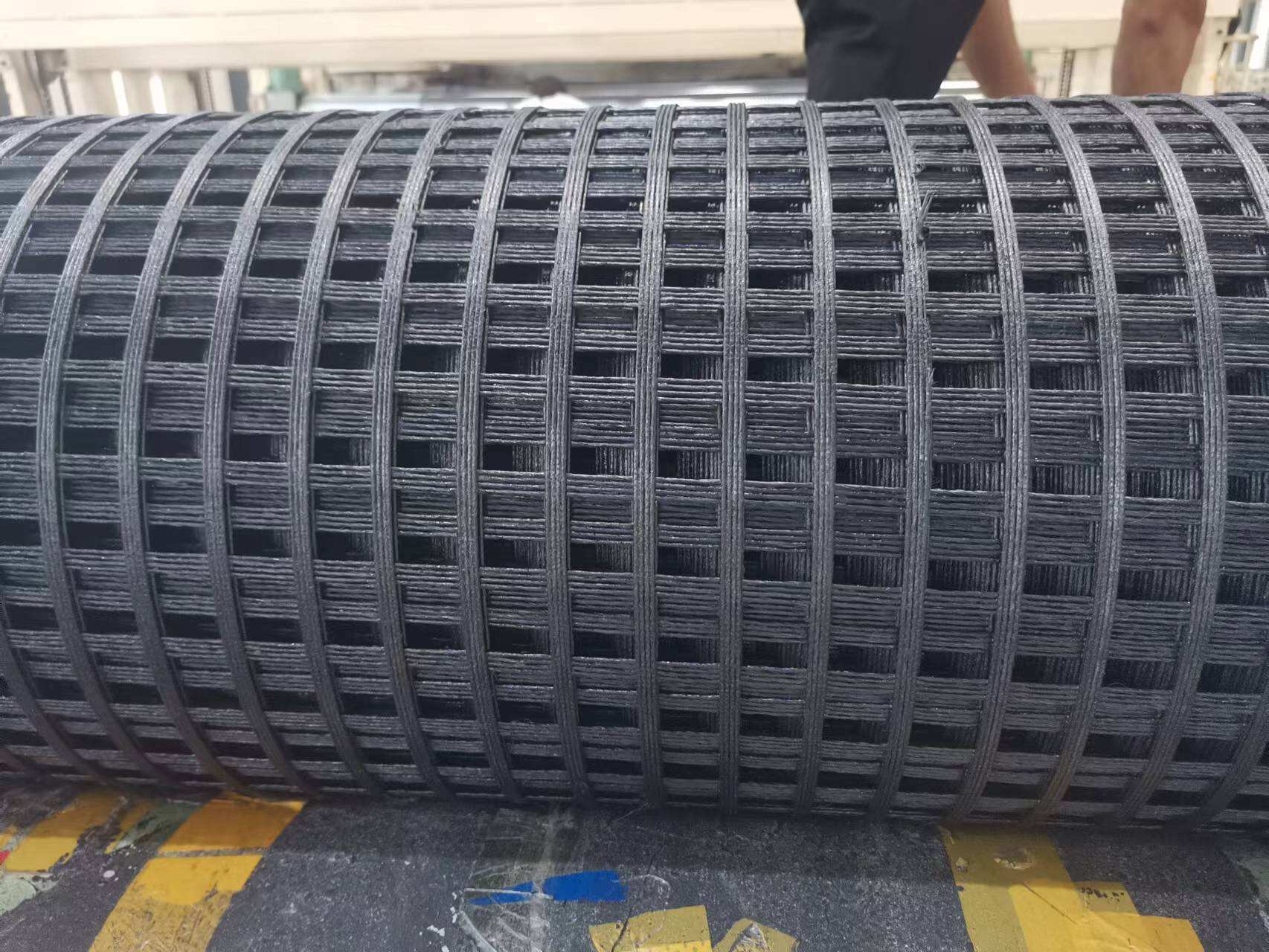
The Role of Geogrids in Enhancing Slope Stability in Landfills
Landfill slopes need reinforcement, and geogrids do the job pretty well by forming these composite structures that stop soil from moving around and keep waste from migrating elsewhere. The way they work is pretty clever actually - those open grids lock into the soil particles, spreading out the weight more evenly across the slope. This helps cut down on sideways pressure too, sometimes as much as 35% less than what happens on regular unreinforced slopes. When we look at mechanically stabilized earth systems, or MSE as engineers call them, the geogrid layers make it possible to build much steeper slopes than normal, often going past 45 degrees without the whole thing falling apart. Real world examples from landfills expanding vertically show something interesting too: when they use geogrid reinforcement, operators can fit between 20% and 40% more waste into the same space without worrying about stability issues.
Mechanisms of Soil Reinforcement with Geogrids
Three key mechanisms underpin the effectiveness of geogrids:
- Aperture Interlock: The grid openings mechanically restrain soil particles, minimizing slippage under load
- Tensile Resistance: Polymer ribs provide tensile strength ranging from 80-120 kN/m, absorbing lateral stresses
- Confinement Effect: Horizontal layers reduce vertical settlement by 50-70% through enhanced particle confinement
This multi-functional reinforcement enables berms to support equipment loads over 25 kPa and manage differential settlement of up to 15%.
Interaction Between Geogrids and Waste Mass in MSW Landfills
Municipal solid waste (MSW) poses unique challenges due to its heterogeneity and ongoing decomposition. Geogrids improve stability through targeted mechanisms:
| Mechanism | Effect on Waste Mass | Performance Improvement |
|---|---|---|
| Shear strength enhancement | Reduces interface slippage | 25-40% higher FoS |
| Load redistribution | Minimizes differential settlement | 30-50% settlement reduction |
| Membrane effect | Contains waste during seismic events | 20% higher seismic resilience |
Field data show that geogrid-reinforced slopes maintain factors of safety (FoS) above 1.5 even with waste densities exceeding 12 kN/m³.
Field Performance of Geogrid-Reinforced MSW Landfill Slopes
Long-term monitoring across 42 North American landfills reveals consistent performance advantages:
- 90% less surface cracking compared to unreinforced slopes
- 60% lower maintenance costs over a decade
- Maximum lateral deformations below 50 mm after 15 years
These systems perform reliably in high-moisture conditions, maintaining stability under leachate recirculation rates as high as 250 L/day/m².
Design Principles for Geogrid-Reinforced MSE Berms in Landfill Construction
Engineering Considerations for Mechanically Stabilized Earth (MSE) Systems in Landfill Construction
Modern landfill designs use geogrid-reinforced MSE berms to handle vertical stresses exceeding 150 kPa while supporting slope angles up to 70°. Critical design parameters include:
- Shear strength compatibility between geogrids and compacted soil (minimum 34° interface friction angle recommended)
- Vertical spacing of 0.5-1.2 m based on pullout resistance testing
- Long-term creep limits (<3% strain over 50 years)
A 2022 FHWA report confirms optimized MSE berm designs reduce lateral displacement by 58% in MSW landfills compared to non-reinforced alternatives.
Influence of Slope Geometry on Geogrid Placement and Effectiveness
| Slope Angle | Required Geogrid Layers | Tensile Strength Demand |
|---|---|---|
| 45° | 8-12 | 20-35 kN/m |
| 60° | 12-18 | 35-60 kN/m |
| 70° | 18-24 | 60-90 kN/m |
Case evidence shows that 1:0.5 slopes (H:V) require 40% more reinforcement than 1:1 configurations to prevent rotational failure, underscoring the importance of geometry in design.
Load Transfer Mechanisms in Geogrid-Reinforced Landfill Berms
Stress redistribution occurs through three primary actions:
- Membrane action – spanning potential failure planes with 5% elongation
- Interlock enhancement – increasing soil confinement pressure by 70-110%
- Friction mobilization – generating interface resistances up to 12 kN/m²
According to a 2021 study in Geosynthetics International, well-designed berms transfer 85% of lateral earth pressures to geogrid layers, reducing peak strain in waste mass by 63%.
Performance and Case Studies of Geogrid-Stabilized Landfill Berms
Application of Geogrid Use in MSE Berms for Lateral Support
Geogrid-stabilized MSE berms deliver critical lateral support by forming composite structures that redistribute stress efficiently. In high-capacity facilities, uniaxial geogrids align with principal stress directions to mitigate shear failure risks. For instance, a 2024 project used 18-meter-tall MSE berms with hybrid soil-geogrid layers to stabilize slopes under 60 kPa surcharge loads.
Case Studies of Geogrid Landfill Berms in Active Waste Containment Sites
In 2023, a major landfill expansion took place in New Jersey, increasing capacity by around 1.7 million tons through the construction of geogrid-reinforced MSE berms made from recycled materials. The monitoring system tracked differential settlement during an 18 month period and found it stayed under 5 mm, which pretty much validated that the original design calculations were spot on. Looking across the globe, another interesting case happened in Gujarat, India back in 2022 where engineers faced similar challenges maintaining slope stability close to existing infrastructure. They went with multi-layer geogrid systems instead of traditional approaches, and not only did they solve the problem but saved approximately 23% compared to standard construction techniques. These kinds of projects show how innovative engineering solutions can deliver both environmental benefits and economic advantages when applied correctly.
Long-Term Monitoring Data from Reinforced Berm Installations
Data from 15 sites (2015-2024) indicate geogrid-reinforced berms sustain slopes steeper than 1:1.5 with creep strain limited to 2-3% over 10 years. Key findings include:
- Interface friction coefficients ≥0.85 between geogrids and compacted soils
- 65-80% reduction in stress transmitted to underlying liners
- Post-construction settlement limited to 12-15 cm/year, versus 25-30 cm in unreinforced areas
These outcomes validate geogrids’ role in enabling sustainable landfill expansion while meeting EPA deformation criteria (5° per 10m height).
Geosynthetic Solutions for Vertical and Steep-Slope Landfill Expansion
Rising land constraints and regulatory demands are driving innovation in vertical landfill expansion, where geosynthetics enable slope angles beyond 1V:0.3H (73° from horizontal). This approach increases usable airspace by 40% compared to traditional 1V:1.5H slopes, leveraging soil-geogrid interaction to maintain stability.
Use of geosynthetics in steep slope reinforcement during vertical landfill expansion
Advanced reinforced soil systems achieve inclinations up to 80° by alternating compacted waste with high-tensile geogrids. A 2024 case study demonstrated how this method added 25% more waste capacity within existing footprints via 18-meter vertical expansions. With interface friction coefficients exceeding 0.8 against MSW, geogrids prevent slippage through effective particle interlock.
Challenges and innovations in high-load vertical expansions
Key challenges include:
- Differential settlement reaching 15 cm/year in decomposing MSW
- Shear stresses over 200 kPa at geomembrane interfaces
- Hydrolysis risks for PET geogrids exposed to acidic leachate (pH <5)
Recent solutions integrate hybrid geocomposites (geogrid-geotextile laminates) with real-time strain monitoring, cutting deformation rates by 63% in field trials.
Geosynthetic reinforcement for geomembrane-soil interface stability
Multiaxial geogrids boost interface shear strength by 40-60% compared to bare geomembranes by:
- Increasing surface roughness (coefficient of friction rising from 0.3 to 0.55)
- Distributing loads across grid apertures
- Preventing stress concentrations under dynamic loading
A monitoring program at a vertically expanded site recorded less than 2 mm/year movement after installing coated geogrids beneath the liner system, satisfying EPA stability requirements for a 10-year service life.
Material Selection: HDPE vs. PET Geogrids in Long-Term Landfill Applications
Comparative Analysis of Creep Behavior of HDPE and PET Geogrids Under Sustained Loading
Selecting between HDPE and PET geogrids requires evaluating long-term creep performance. PET exhibits 22% less strain accumulation than HDPE under simulated 50-year loads and retains 85% of initial tensile strength in accelerated tests. However, HDPE’s viscoelastic nature allows better stress redistribution, reducing localized failure risks in uneven settlements.
Long-Term Performance Predictions Based on Accelerated Creep Testing
Accelerated testing at 40°C indicates PET maintains 90% of design strength after 100-year equivalent exposure, outperforming HDPE, which retains 78%. In high-stress applications (>50 kN/m), PET sustains a 3:1 safety margin versus HDPE’s 2:1. However, PET’s higher stiffness increases susceptibility to construction damage by approximately 18%, a practical consideration in field deployment.
Environmental Degradation Factors Affecting Geogrid Longevity in Landfill Settings
How different materials break down over time really impacts how long they last. Take HDPE for instance it stands up pretty well against chemicals, losing only about 5% of its strength even when exposed to leachate ranging from highly acidic (pH 2) to very alkaline conditions (pH 12). PET plastic starts off stronger, around 25% better in terms of tensile strength initially, but doesn't hold up so great under sunlight exposure, degrading about 18% after simulated 25 years outdoors. Both plastics face similar challenges from microbes though. Lab tests where these materials were left in contact with various organisms showed minimal impact, typically less than 3% weight reduction over many years of continuous exposure.
Controversy Analysis: Short-Term Gains vs. Long-Term Reliability in Polymer-Based Reinforcements
The engineering community debates HDPE’s 30% cost advantage against PET’s projected 40% longer service life in vertical expansions. While HDPE installations proceed 12% faster, 15-year data from three continental waste authorities show PET systems incur 19% lower lifetime maintenance costs, highlighting the trade-off between upfront savings and long-term reliability.
Frequently Asked Questions
Why are geogrids used in landfill construction?
Geogrids are used in landfill construction to enhance slope stability by reinforcing soil, preventing waste migration, and allowing for steeper slopes, therefore maximizing waste storage.
What are the main mechanisms by which geogrids reinforce soil?
Geogrids reinforce soil through aperture interlock, tensile resistance, and confinement effects, which collectively enhance stability and reduce deformation.
How do geogrids interact with municipal solid waste?
Geogrids enhance shear strength, load redistribution, and membrane effects in municipal solid waste, improving overall landfill stability and resilience.
What factors are considered in designing geogrid-reinforced landfill berms?
Key design factors include shear strength compatibility, vertical spacing, and long-term creep limits to efficiently support landfill structures.
How do HDPE and PET geogrids compare in landfill use?
PET geogrids perform better under sustained loading with less strain accumulation, while HDPE offers cost advantages and better resistance to localized failures.
Table of Contents
- The Role of Geogrids in Enhancing Slope Stability in Landfills
- Mechanisms of Soil Reinforcement with Geogrids
- Interaction Between Geogrids and Waste Mass in MSW Landfills
- Field Performance of Geogrid-Reinforced MSW Landfill Slopes
- Design Principles for Geogrid-Reinforced MSE Berms in Landfill Construction
- Performance and Case Studies of Geogrid-Stabilized Landfill Berms
- Geosynthetic Solutions for Vertical and Steep-Slope Landfill Expansion
-
Material Selection: HDPE vs. PET Geogrids in Long-Term Landfill Applications
- Comparative Analysis of Creep Behavior of HDPE and PET Geogrids Under Sustained Loading
- Long-Term Performance Predictions Based on Accelerated Creep Testing
- Environmental Degradation Factors Affecting Geogrid Longevity in Landfill Settings
- Controversy Analysis: Short-Term Gains vs. Long-Term Reliability in Polymer-Based Reinforcements
- Frequently Asked Questions