 EN
EN
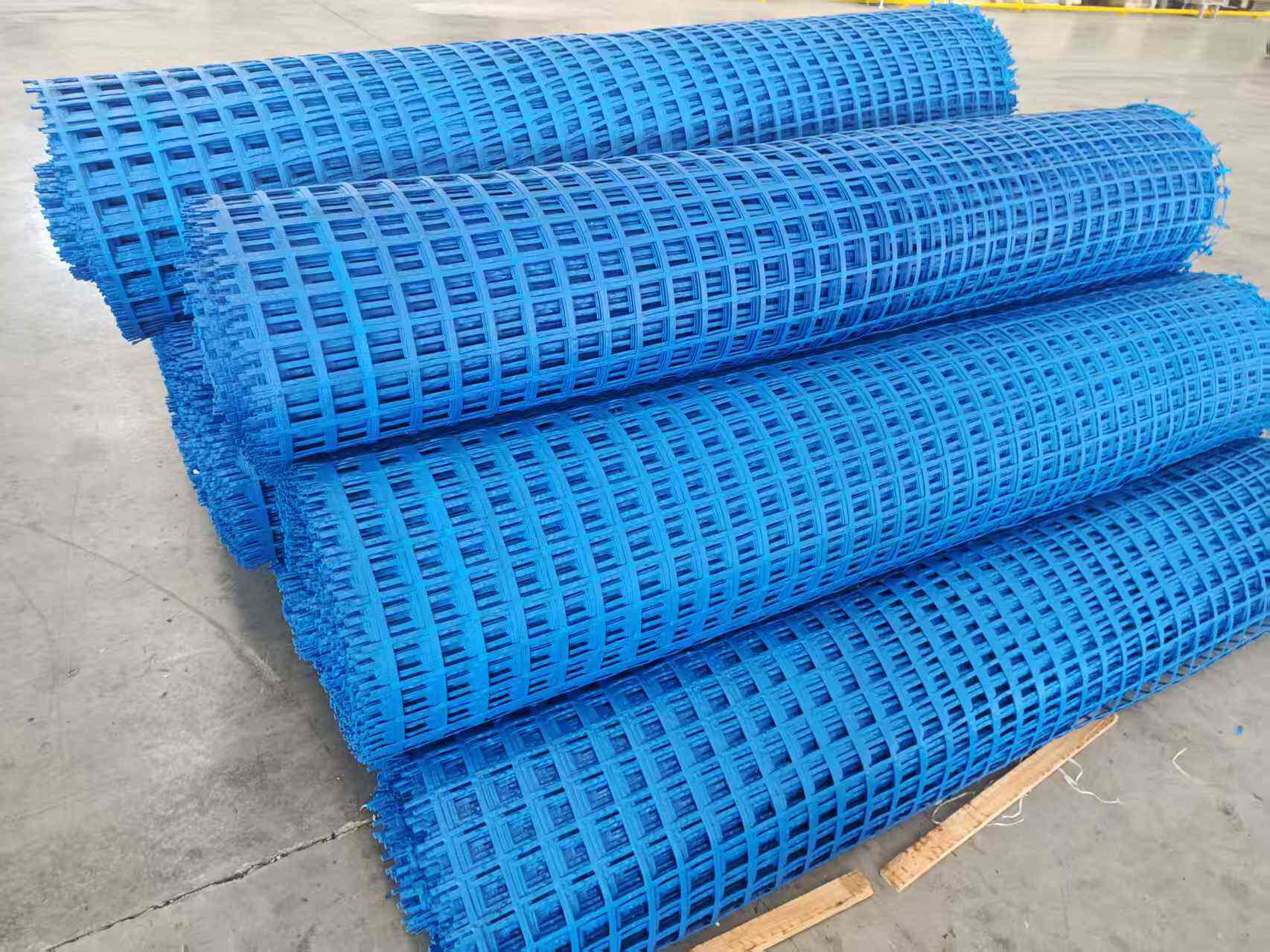
Fire-Resistant Building Protection Mesh
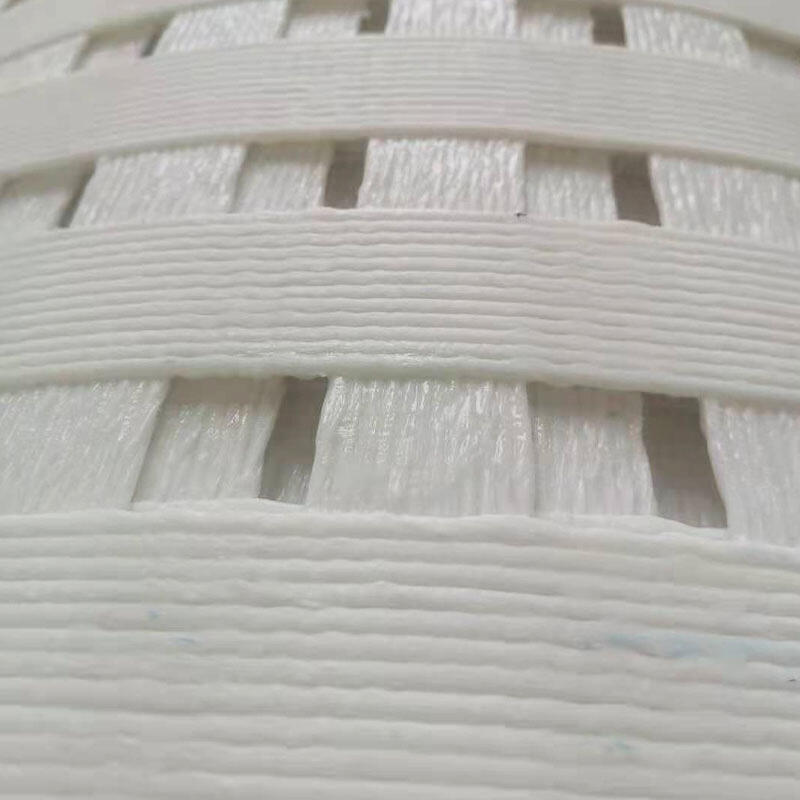
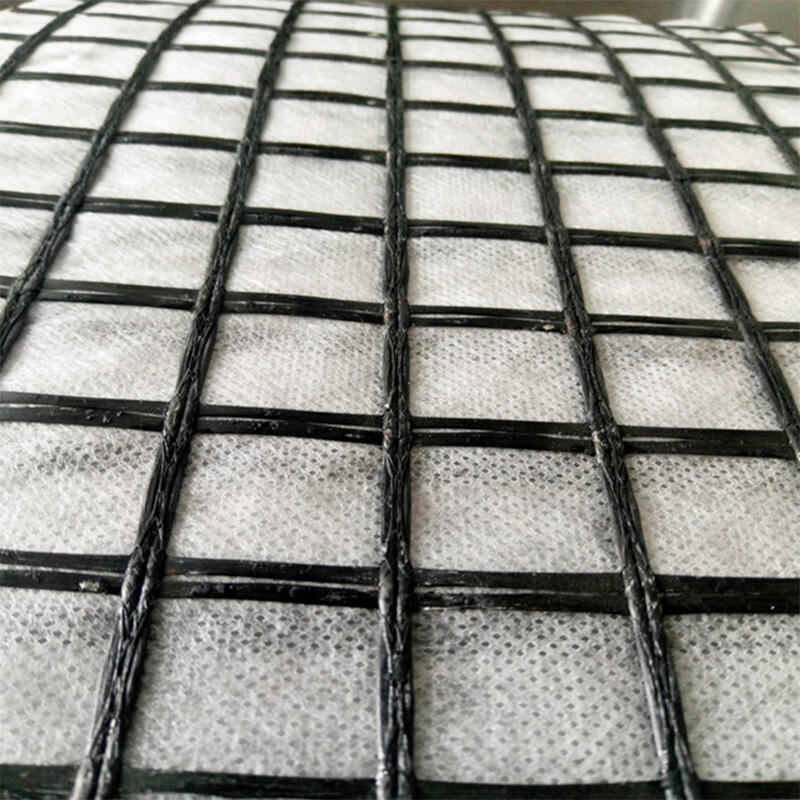
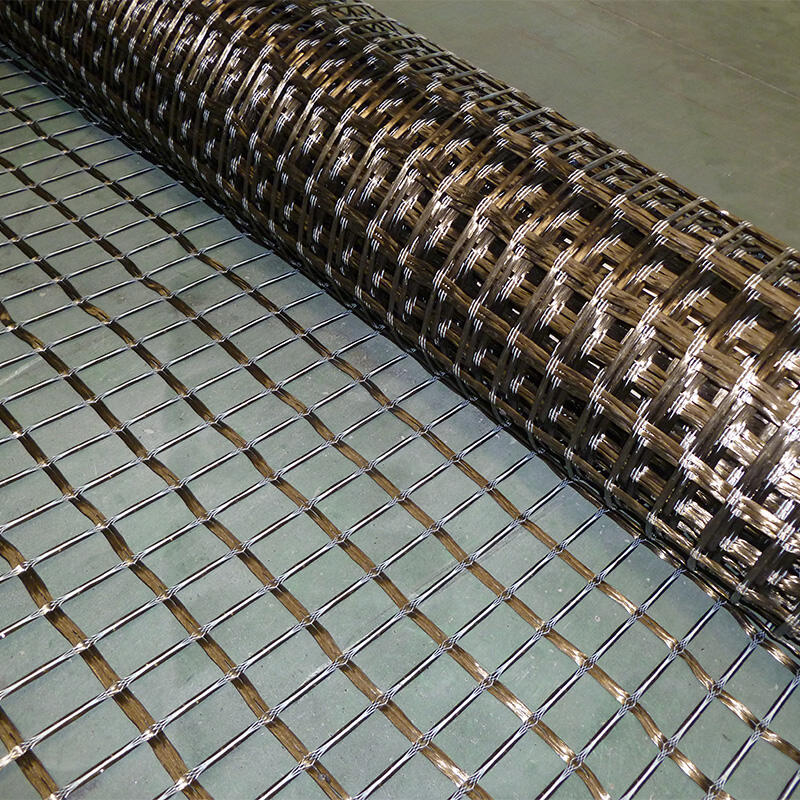
The Fire-Resistant Building Protection Mesh is a professionally engineered safety product crafted to address the critical protection needs of the construction industry. At its core, the mesh selects high-strength, high-modulus, and low-shrinkage twisted industrial polyester fiber as the primary raw material—this isn’t ordinary polyester, but an industrial-grade variant processed through a multi-stage twisting technique that enhances its structural stability. Unlike common fibers that stretch or break under stress, this specialized polyester maintains exceptional tensile strength even in harsh conditions, laying a solid foundation for the mesh’s performance.
- Overview
- Recommended Products
The Fire-Resistant Building Protection Mesh is a professionally engineered safety product crafted to address the critical protection needs of the construction industry. At its core, the mesh selects high-strength, high-modulus, and low-shrinkage twisted industrial polyester fiber as the primary raw material—this isn’t ordinary polyester, but an industrial-grade variant processed through a multi-stage twisting technique that enhances its structural stability. Unlike common fibers that stretch or break under stress, this specialized polyester maintains exceptional tensile strength even in harsh conditions, laying a solid foundation for the mesh’s performance.
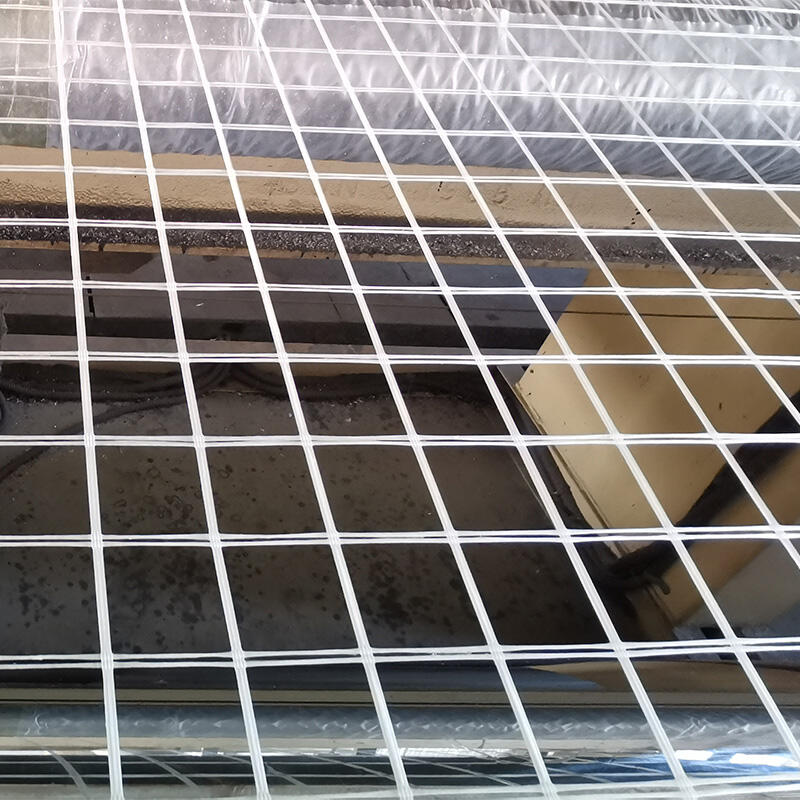
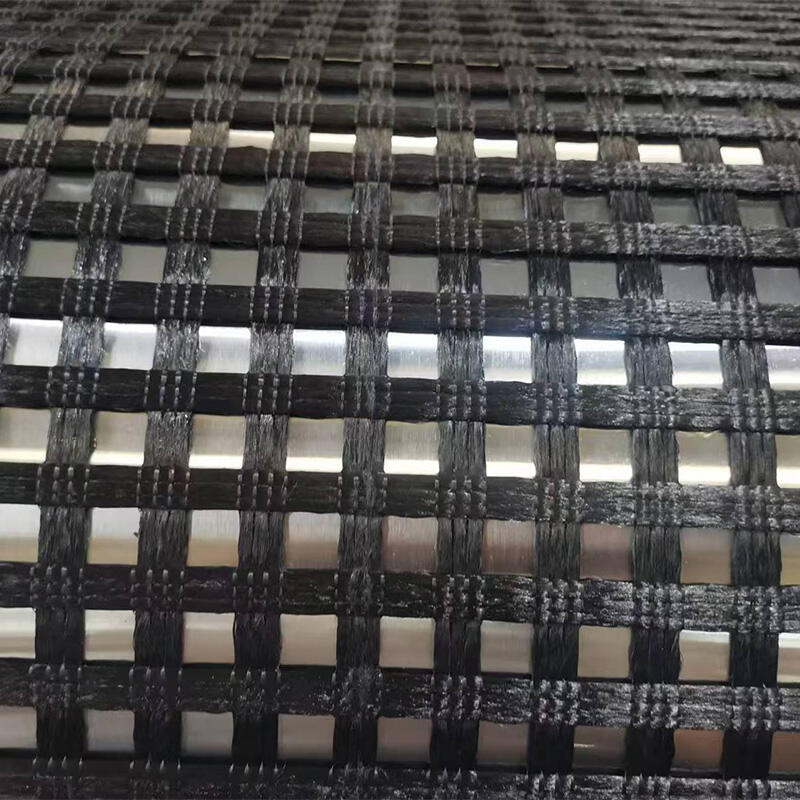
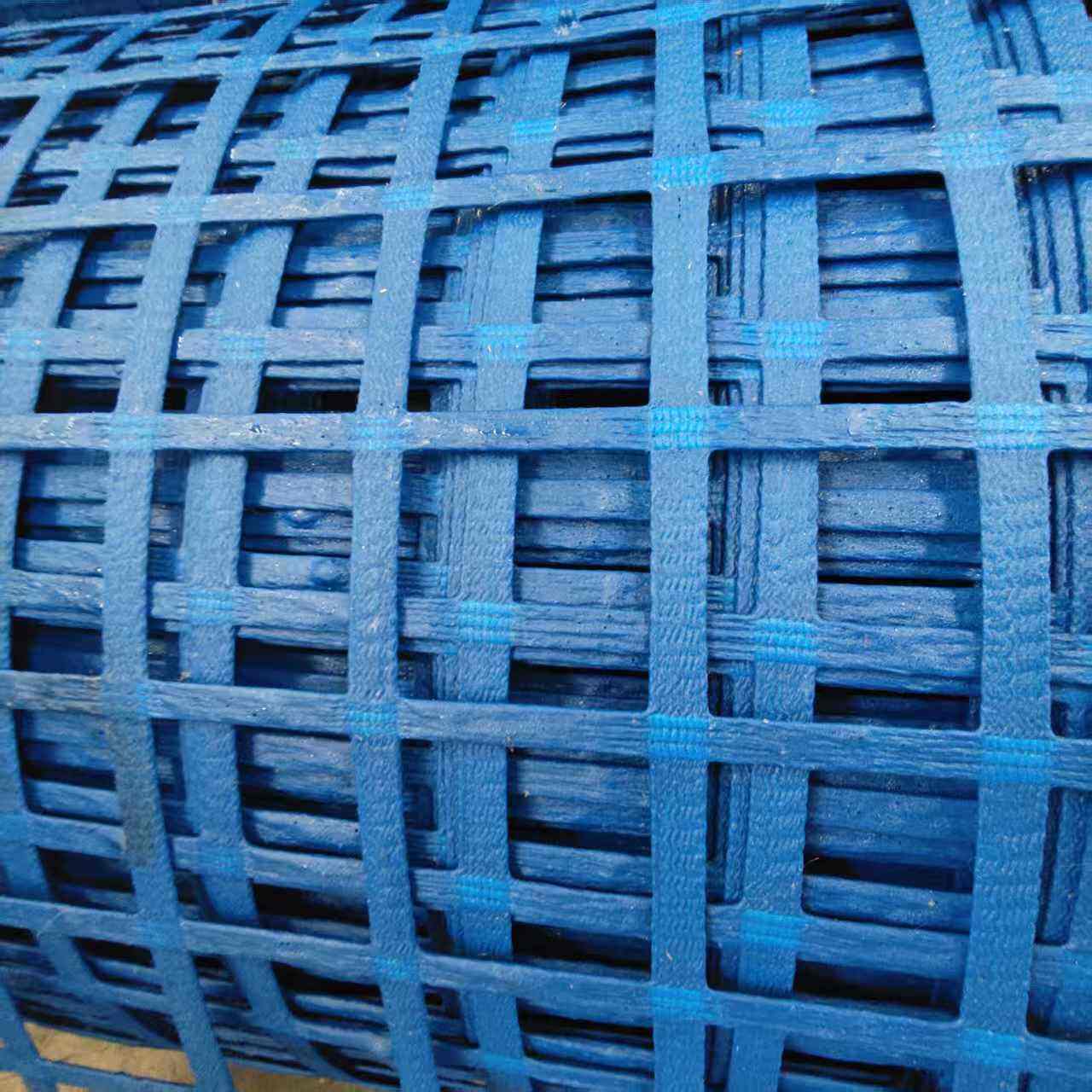
The manufacturing process employs advanced warp-knitting technology to create an oriented structure, ensuring that warp and weft fibers remain straight without mutual bending. This design eliminates weak points caused by fiber overlap, allowing the mesh to distribute external forces evenly across its entire surface. A key innovation lies in its junction treatment: the cross points of warp and weft fibers are tightly bundled and bonded using high-strength long polyester filaments, forming tough, flexible connections that resist tearing even if individual fibers sustain minor damage.
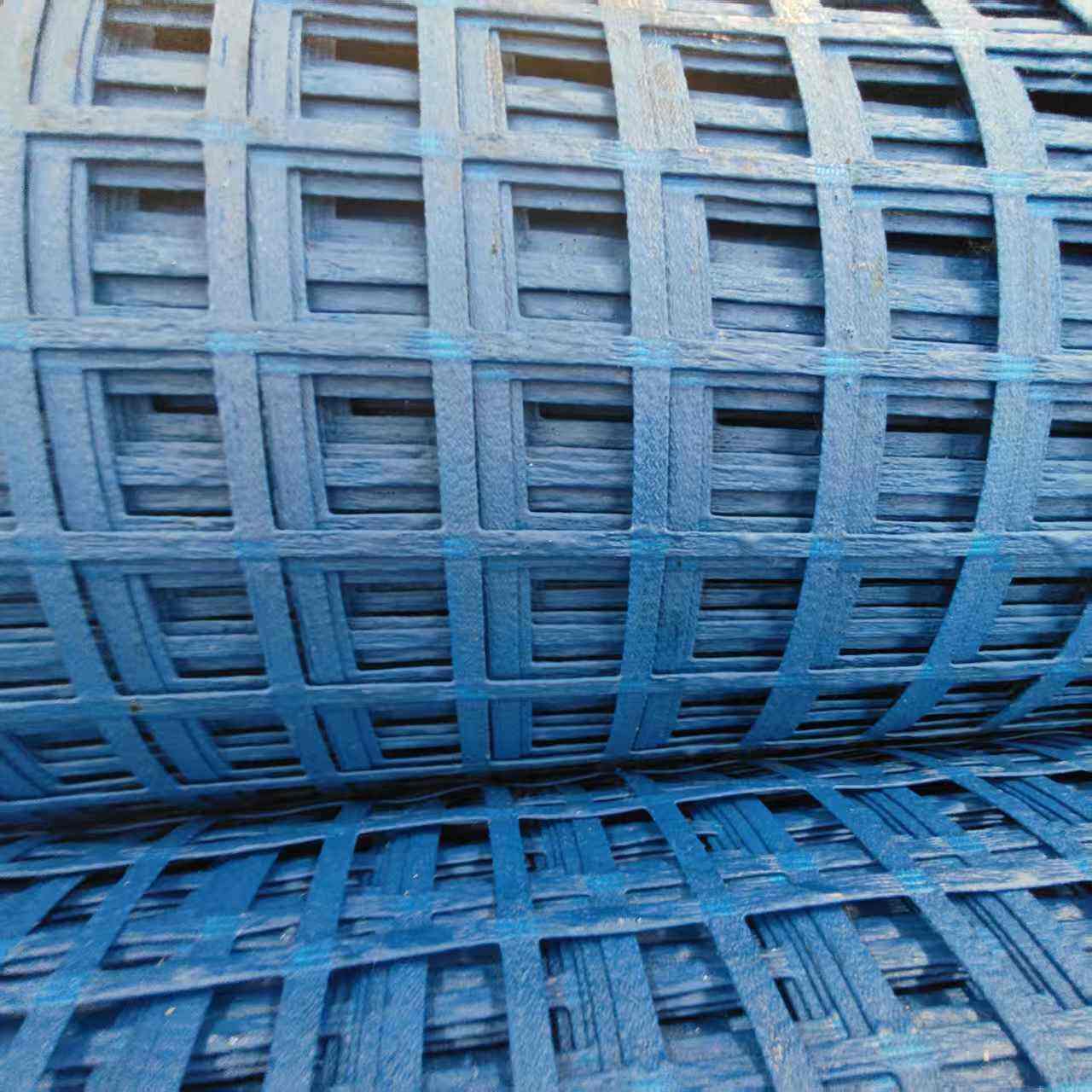
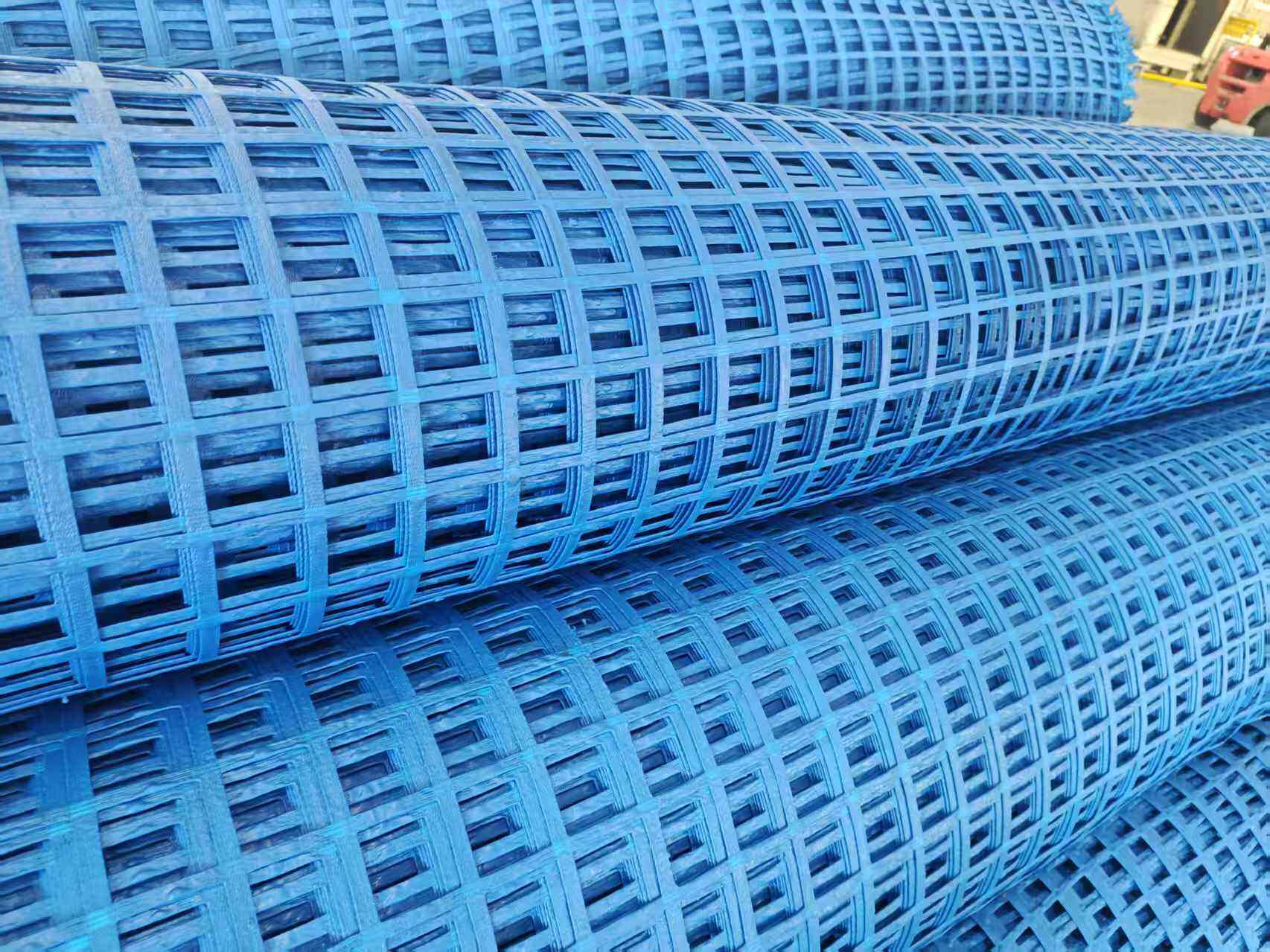
To unlock its full performance potential, the mesh undergoes a precision coating process with high-quality oil-soluble PVC and premium fire-resistant additives. The oil-soluble PVC coating not only enhances the mesh’s water resistance and abrasion resistance but also forms a smooth, durable surface that withstands frequent handling. The fire-resistant additives, integrate seamlessly with the PVC layer, ensuring the mesh retains its mechanical properties while gaining superior fireproof capabilities. This combination of material selection and craftsmanship results in a mesh that balances strength, flexibility, and fire resistance perfectly.
At the heart of this protection mesh’s exceptional performance is its premium raw material selection: high-strength, high-modulus, and low-shrinkage twisted industrial polyester fiber. These material properties lay the foundation for a mesh that can withstand the harsh conditions of construction sites, from extreme temperatures to constant mechanical stress.
Distinguished Characteristics
● High strength, high modulus and low elongation: The industrial polyester fiber core endows the mesh with exceptional mechanical properties. The high modulus ensures the mesh maintains its shape under heavy loads, while the low elongation rate prevents stretching that would compromise its protective function. This trio of properties makes the mesh a reliable barrier against physical impacts.
● Anti-fire, fall protection and safety protection: Fire resistance is the mesh’s standout feature—its PVC coating mixed with fire-resistant additives allows it to meet fire safety standards. When exposed to open flames, the mesh forms an insulating char layer that slows flame spread and blocks heat transfer. As a fall protection tool, it acts as a robust safety net for workers at height, catching falling objects and preventing accidental falls. Additionally, its tight mesh structure blocks small debris, reducing the risk of eye or skin injuries on-site.
● Anti-aging and anti-fragile: Constructed to withstand the elements, the mesh exhibits excellent anti-aging performance. The oil-soluble PVC coating resists UV radiation, preventing fiber degradation caused by long-term sun exposure. It also stands up to rain, humidity, and temperature fluctuations , without becoming brittle or losing strength.
Application Case
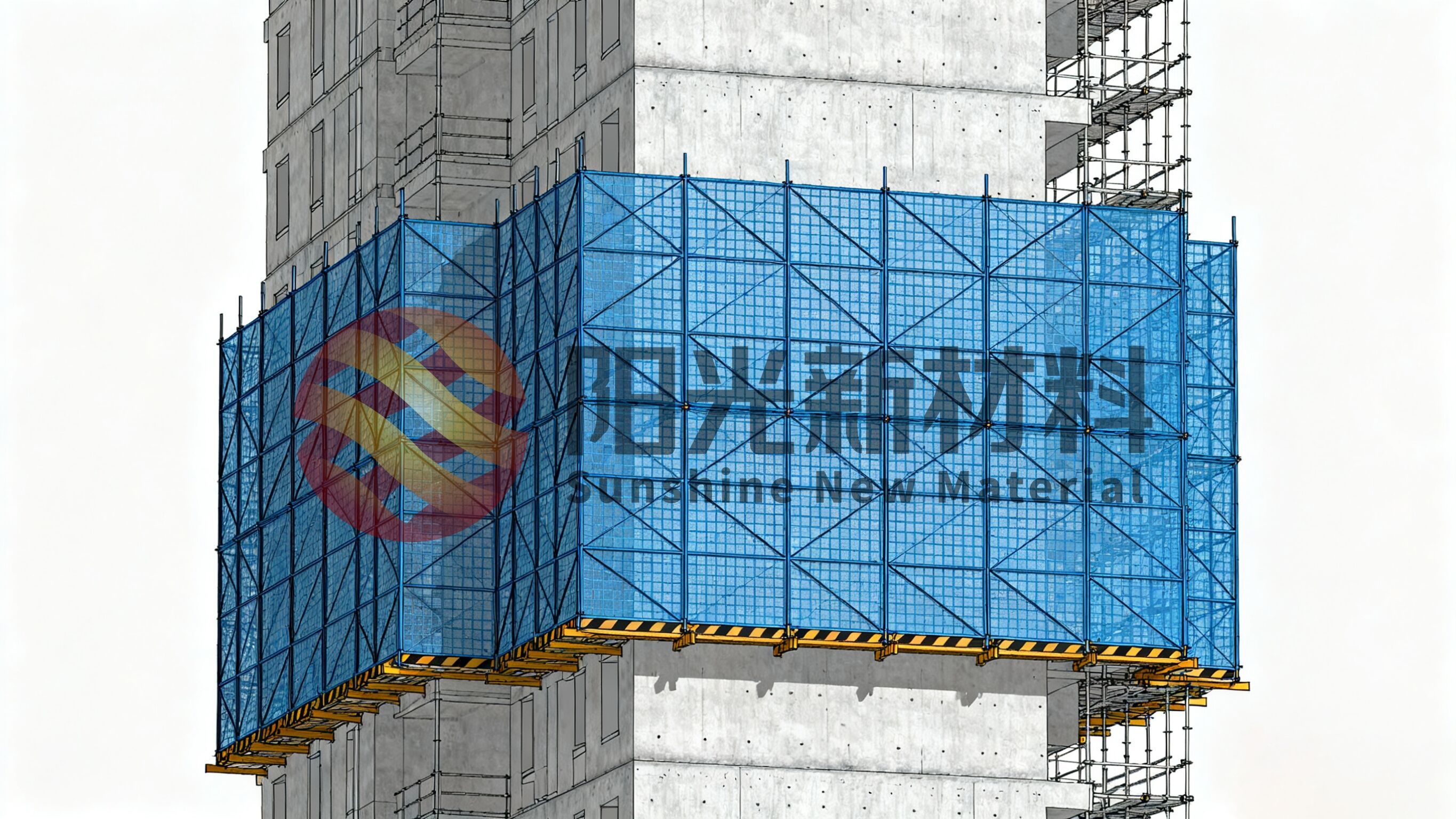
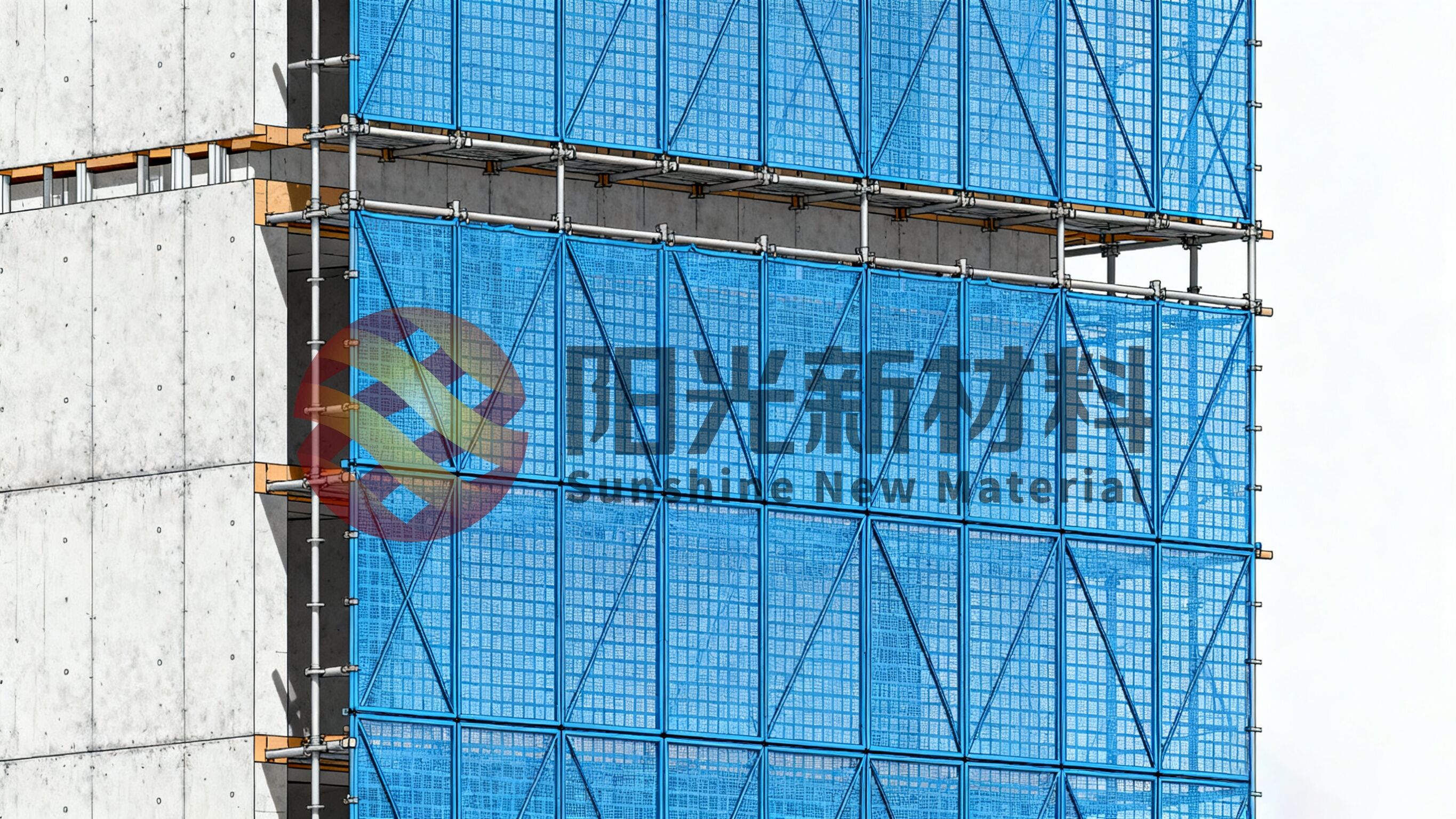
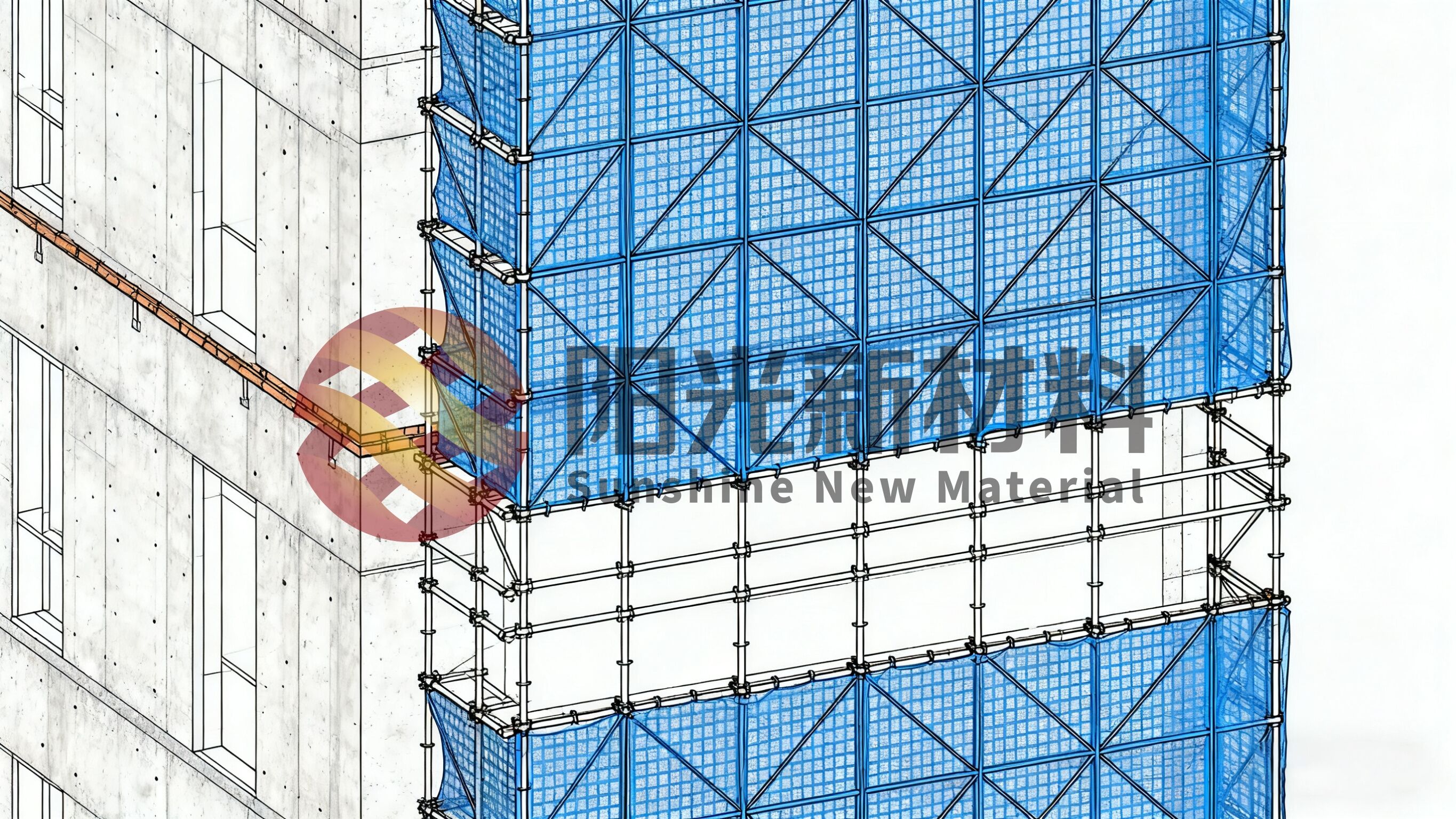
1. Building External Wall Refurbishment Project: External wall renovations often involve removing old tiles, plaster, and insulation, creating a high risk of falling debris. The Fire-Resistant Building Protection Mesh is installed vertically along the building facade, covering windows, balconies, and other vulnerable areas. Its lightweight design and flexibility allow easy fitting around irregular architectural features, while its high strength catches falling materials to protect pedestrians and vehicles below. In case of accidental fire during renovation—such as from electrical work—the mesh acts as a fire barrier, preventing flames from spreading between floors, a crucial safety measure for old buildings lacking modern fireproof structures.
2. High-risk Work Area (such as welding): Welding operations generate intense heat, sparks, and molten metal fragments that easily ignite nearby flammable materials like wood, packaging, or insulation. The mesh is used to enclose the welding zone, forming a spark-resistant barrier that catches hot debris before it can cause fires. Compared to heavy metal screens, it is lightweight and easy to assemble, allowing quick repositioning as welding work moves. It also protects workers by blocking flying sparks, reducing the risk of burns and eye injuries, making it a staple in shipyards, steel structures, and on-site welding tasks.
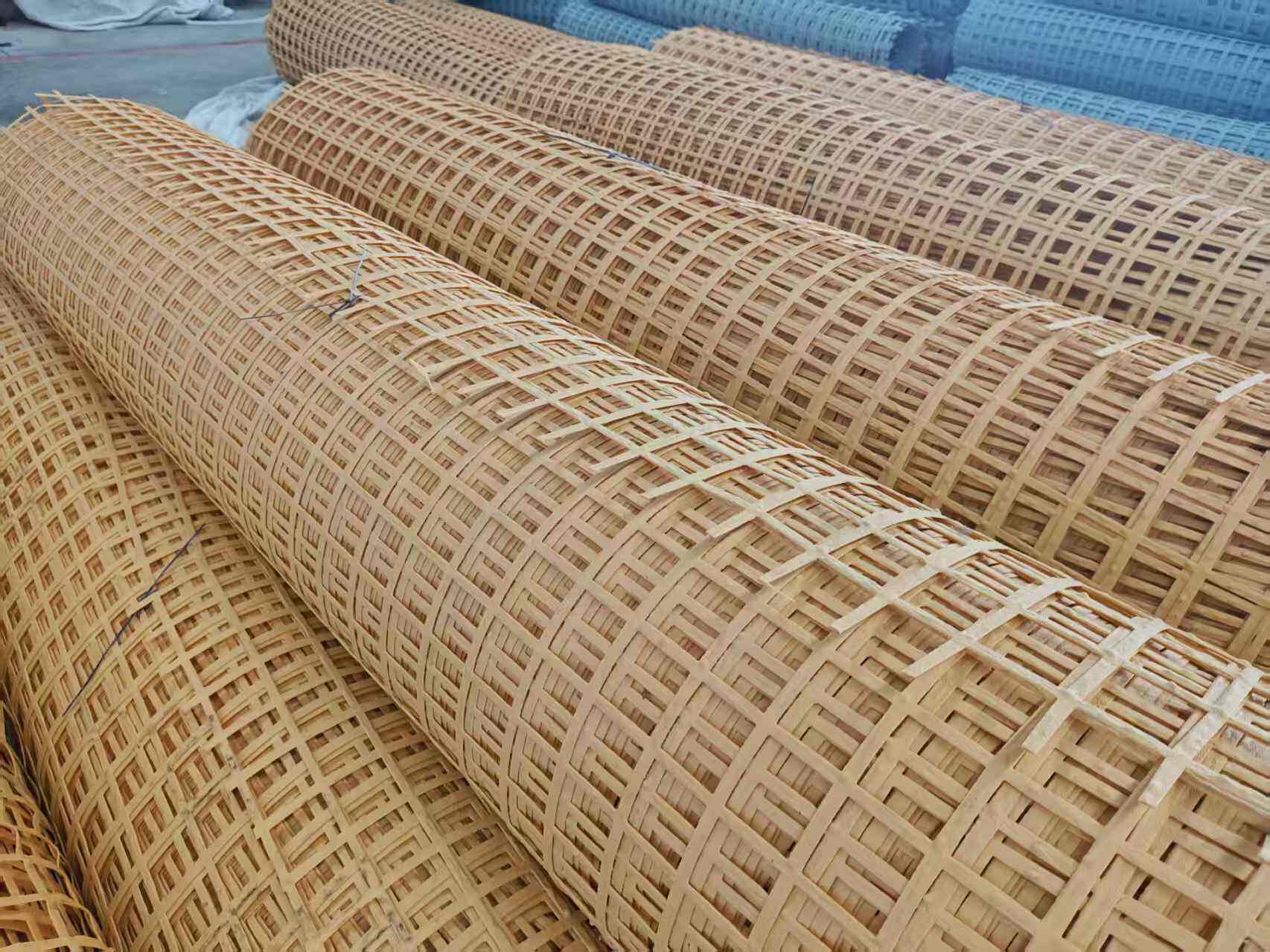
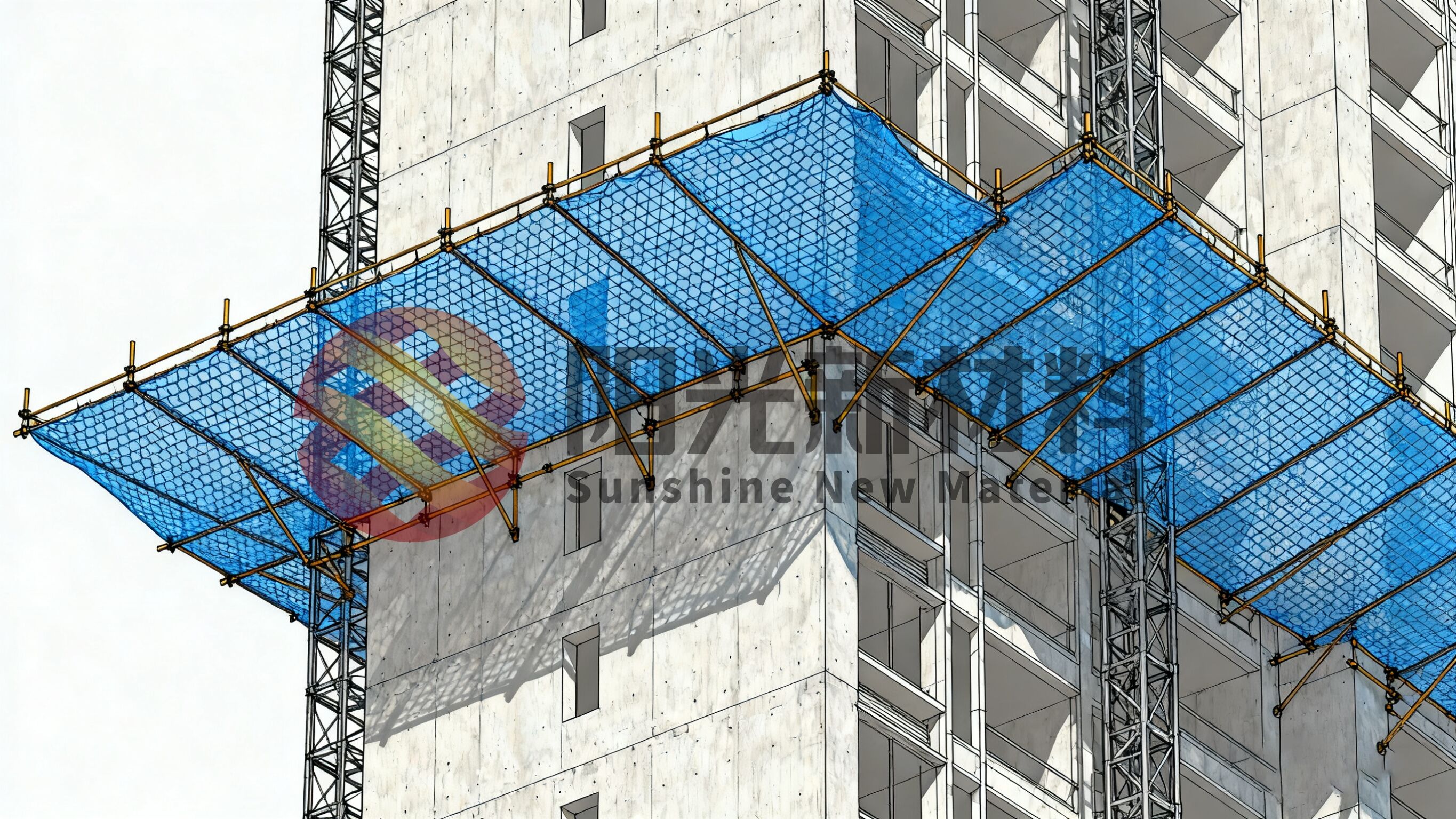
3. Construction Site: On general construction sites, the mesh serves multiple roles as a comprehensive safety solution. It is used as perimeter fencing to isolate hazardous areas like foundation pits and high-rise working platforms, with its bright color (optional yellow or orange) enhancing visibility to prevent accidental entry. For high-rise construction, it is installed vertically between floors as a "safety curtain" to block falling objects and protect workers on lower levels. During demolition work, it covers the structure to control debris spread, minimizing environmental impact and ensuring site safety. Its durability and reusability make it cost-effective for long-term construction projects, from residential buildings to commercial complexes.